Sunday, August 28, 2022

The Lavender Hill Mob (1951)

My love for English Comedy can be traced back to two sources: actor Peter Sellers and the comedy troupe Monty Python's Flying Circus. Sellers tickled me in my youth with his bumbling French detective Inspector Clouseau in a series of Blake Edwards films including A SHOT IN THE DARK (1964), THE RETURN OF THE PINK PANTHER (1975), and THE PINK PANTHER STRIKES AGAIN (1976). But it was also Sellers's ability to play multiple roles in films that caught my attention in Jack Arnold's THE MOUSE THAT ROARED (1959) and Stanley Kubrick's DR. STRANGELOVE (1964) in which Sellers plays three different characters in both films. Monty Python's Flying Circus was like no style of comedy I had ever seen before.  Skits starting in the middle or having no conclusion, the use of funny, twisted words, and irrelevant sight gags (including the occasional nudity), the young Cambridge and Oxford comedian/actors Graham Chapman, John Cleese, Terry Gilliam (the one American), Eric Idle, Terry Jones, and Michael Palin forever changed my sense of humor. Monty Python would move on from television to films with the hugely popular MONTY PYTHON AND THE HOLY GRAIL (1975) and MONTY PYTHON'S LIFE OF BRIAN (1979). I have no doubt that both Peter Sellers and the Monty Python group were inspired by a certain actor and some films that actor made for a small but creative studio in the late 40s and early 50s. 

The resurgence of English comedy can be traced to after World War II.  Leading the charge was actor Alec Guinness and the small Ealing Studios. Ealing Studios, although known as a thrifty company, would have a string of comedy hits after the war including KIND HEARTS AND CORONETS (1949), THE LAVENDER HILL MOB (1951), THE MAN IN THE WHITE SUIT (1951), and THE LADYKILLERS (1955).  Alec Guinness appeared in all four films.  In KIND HEARTS AND CORONETS, Guinness would play eight different roles which would be an inspiration for Peter Sellers to play multiple roles in his films.  Guinness and Sellers would even appear together in Alexander Mackendrick's THE LADYKILLERS.  I think originally my plan was to blog about THE LADYKILLERS but somehow, I got THE LAVENDER HILL MOB in my brain instead.  Although both films have a crime element to them, they are primarily comedies.  Furthermore, THE LAVENDER HILL MOB has a connection to a more modern film starring two Monty Python members and the first appearance in a film by a young Audrey Hepburn (don't blink or you'll miss her as she makes an appearance in the first few minutes of LAVENDER).

Directed by Charles Crichton and an Academy Award winning screenplay by T.E.B. Clarke, THE LAVENDER HILL MOB opens with mild mannered bank clerk Henry Holland (Alec Guinness) living it up at a Rio De Janeiro cafe, handing out wads of cash to waiters, philanthropists, and the beautiful Chiquita (Audrey Hepburn in her first screen appearance).  Holland reminisces to a stranger sitting at his table how he came to arrive in Rio.  We flashback to London a year earlier. Holland works as a bank clerk, supervising the delivery of bullion from the gold refinery to the bank.  Holland has been doing the same job for twenty years.  Honest, underpaid, treated poorly by his supervisor Mr. Turner (Ronald Adam), Holland has a secret plan.  He wants to steal a shipment of gold bullion from his own bank.  His only problem is finding a method to smuggle the bullion abroad. One night while reading a crime novel to his neighbor Mrs. Chalk (Marjorie Fielding) at the Balmoral Private Hotel in the Lavender Hill section of London where they both live, a new tenant Alfred Pendlebury (Stanley Holloway) arrives.  Pendlebury is an artist. Pendlebury makes and sells all kinds of tourist novelties including miniature lead Eiffel Towers paperweights.  Pendlebury shows Holland around his factory. Those Eiffel Tower replicas give Holland an idea.

Holland approaches Pendlebury with his plan to steal a shipment of gold bullion.  When Pendlebury asks how they could possibly smuggle so many gold bars without the authorities discovering it, Holland suggests melting the gold into miniature Eiffel Towers paperweights and ship them to France. Pendlebury likes the scheme and becomes his partner.  When Holland returns to the office the next day, Mr. Turner has good news.  Holland has been promoted and will be moved from the Bullion Office to Foreign Exchange.  Holland is mortified. He and Pendlebury now need to speed up the robbery before his transfer.  The men realize they will need some real criminals to assist them. Holland and Pendlebury go around town loudly discussing Pendlebury's trouble with his safe's lock with his company's payroll inside.  Their ruse attracts two safecrackers: Lackery Wood (Sidney James) and Shorty Fisher (Alfie Bass). Holland explains their plan to the two petty criminals. Not surprisingly, Lackery and Shorty eagerly join the Lavender Hill Mob.

Holland lays out the plan which involves Pendlebury, Lackery, and Shorty. Holland's final trip will be to escort 212 gold bars. During the route, Holland signals to the security drivers he believes someone is following them.  The driver stops to investigate. Shorty, pretending to be a street vendor selling art, jumps into the van and drives off with Holland in the back. Shorty takes the van to Pendlebury's shop where he and Lackery unload the gold into one of Pendlebury's vans.  They tie up Holland as part of the plan, but the police are already snooping around, scaring Lackery and Shorty who drive off, leaving Holland blindfolded and clueless to his surroundings. Holland falls into the Thames River where he's rescued by two police officers. Holland is taken to the police station, questioned by Inspector Farrow (John Gregson) who Holland feeds misleading information to, and released.  The Lavender Hill Mob begin melting down the gold into little Eiffel Towers and ship them off to Paris. Pendlebury has the boxes marked with a special letter which means don't open. The plan is going along splendidly. But like most robberies, things begin to unravel. 

After biding their time, Holland and Pendlebury travel to Paris to pick up their shipments. On a lark, they go to the top of the Eiffel Tower where Pendlebury shows Holland where the lead Eiffel Towers are sold. To their horror, they discover one of their specially marked boxes open behind the vendor.  She has just sold six gold Eiffel Towers to a group of English school girls. Holland and Pendlebury chase the English girls all the way back to St. Christopher's School in London.  They convince the School Mistress (Eileen Harvey) the girls accidentally bought a test prototype and switch out the gold ones for the lead ones plus a ten-shilling bill. But one girl June Edwards (Alanna Boyce) won't switch her souvenir out. Holland and Pendlebury follow her after school to a Police Training School where an exhibition on Police Work is going on.  June gives the gold paperweight to her policeman friend. Surrounded by hundreds of policemen, Holland and Pendlebury manage to snatch the last gold tower. Chased thru the exhibition, they steal a police car and speed away. Pendlebury is caught but Holland manages to flee with six gold paperweights, eventually reaching Rio.  THE LAVENDER HILL MOB ends with Holland admitting to the stranger he's spent the last of the money. But there's one last surprise in store as Holland and the stranger rise to depart the Rio cafe. 

THE LAVENDER HILL MOB follows the classic heist film checklist but in a unique, English way. It's the anti-thesis of John Huston's THE ASPHALT JUNGLE, an American film that was released a year earlier in 1950 about a jewelry heist that unravels. In ASPHALT, most of the participants are criminals. With LAVENDER, the key participants are a meek bank clerk and an eccentric artist. The plan in THE ASPHALT JUNGLE crumbles when partners begin to double-cross each other. In THE LAVENDER HILL MOB, nobody mistrusts anyone to the point that Lackery and Shorty have complete faith that Holland and Pendlebury will return from Paris with the gold and split it fairly between the four of them.  Bad luck is the one ingredient that binds all heist films from Raoul Walsh's HIGH SIERRA (1941) to Quentin Tarantino's RESERVOIR DOGS (1992) to Michael Mann's HEAT (1995). A cop showing up at the wrong time. A member of the heist crew oversleeping or talking too much the night before. For Holland and Pendlebury in LAVENDER HILL MOB, it's one of the boxes of gold Eiffel Towers marked to remain sealed that is inadvertently opened at an Eiffel Tower kiosk.

Two sequences in particular help make THE LAVENDER HILL MOB rise above most comedies.  The first sequence is almost surreal with director Crichton pre-dating the French New Wave with his camera angles, editing, and effects.  Holland and Pendlebury, atop the Eiffel Tower, confident their scheme has worked are aghast to discover one of their prized boxes of gold bullion paperweights has not only been opened but six English school girls have bought them. As the schoolgirls take the elevator down, Holland and Pendlebury chase them, racing down the circular stairs of the Eiffel Tower, throwing bowler hats and coats to the wind, laughing hysterically and becoming dizzier by the moment until they reach terra firma. It's a kaleidoscopic foreshadowing that their foolproof plan has started to go awry.

The second sequence is an extended set piece and the finale as the two men plan to steal the last gold paperweight from the one schoolgirl who wouldn't exchange her gold one for a lead one. The schoolgirl leads them to all places the local police station where an Exhibition about Police Work is in full motion and her favorite police officer works at. Holland and Pendlebury audaciously steal the last paperweight right under the authorities noses then lead them on a wild chase through the police headquarters at first before they steal a police car. The police become Keystone Cops temporarily, running into dead ends at the exhibition or crashing their police cars into each other trying to catch the Lavender Hill Mob.

THE LAVENDER HILL MOB thumbs its nose at authority institutions like banks and the police. Holland is passed over for promotions because he's humdrum and honest.  For twenty years, he never complains and does his job. But secretly, he's plotting against the bank not necessarily because they have ignored him. He's just ridden with gold bullion for so long, it's shine has corrupted him. Even after the robbery, the bank parades Holland around.  He's a hero to them even though the gold bars are gone. Little does the bank know their meek Mr. Holland was the architect of the robbery. The finale at the exhibition showcases how police solve crimes. But the perpetrators who have stolen the gold bullion brazenly snatch the last Eiffel Tower gold paperweight right in front of the authorities.  Their escape makes the police look foolish as they run and stumble over each other to catch them. Later, in the stolen police car, Holland uses the wireless microphone to send the other police cars on wild goose chases. Briefly, the police look like fools. But in the end, Inspector Farrow and his men prevail. 

Ealing Studios comedies seemed to favor elderly women as foils or comic characters.  In THE LADYKILLERS, an octogenarian landlady Mrs. Wilberforce becomes a thorn in the side of five bank robbers hiding out as tenants in her dilapidated house.  THE LAVENDER HILL MOB has no such central character, but it does have the white-haired Mrs. Chalk, a mystery loving neighbor of Holland.  Holland reads to her a hardboiled crime thriller when he returns from work one night.  Mrs. Chalk is very excited when Inspector Farrow and his men drop by to question Holland. It's like a scene from one of her crime books. Holland and Pendlebury both rent from the motherly Ms. Evesham (Edie Martin) who has signs around her hotel like "wipe your feet" and a curfew for her boarders. Just like Mrs. Wilberforce, Ms. Evesham has no idea that criminals are renting from her. 

For director Charles Crichton, THE LAVENDER HILL MOB would be his biggest hit for Ealing Studios and his career until Monty Python alum John Cleese reached out to Crichton to direct Cleese's screenplay A FISH CALLED WANDA (1988) co-starring Kevin Kline, Jaime Lee Curtis, and fellow Python alum Michael Palin. Crichton would be the perfect choice for A FISH CALLED WANDA as it had many elements similar to THE LAVENDER HILL MOB. There's a crime element (a jewelry robbery), eccentric characters (Kline's buffoonish Otto and Palin's stuttering animal lover), and an elderly woman with dogs who keeps getting in the way of Palin's plan for revenge on Otto for his sadistic treatment of his prized aquatic fish. A FISH CALLED WANDA would reintroduce the film world to Charles Crichton and his skill at handling comedy with a caper plot.


Crichton (with the assistance of Guinness) would introduce cinephiles to a future film actress and movie star in THE LAVENDER HILL MOB. Although she only appears for about ten seconds at the very beginning of the film, Audrey Hepburn makes quite an impression as the beautiful Chiquita with her black gloves, white suit, and beautiful profile. Apparently, Guinness was impressed with the young Hepburn as a stage actress and arranged for her small role in the film.  Two years later, the world would discover Audrey Hepburn in William Wyler's comedy ROMAN HOLIDAY (1953) starring Gregory Peck and she would rocket to stardom. Ironically, Stanley Holloway who plays Pendlebury in LAVENDER would play Hepburn's father in George Cukor's MY FAIR LADY (1964). Also look for a young Robert Shaw (FROM RUSSIA WITH LOVE, JAWS) in an uncredited part as a police chemist at the exhibition and Richard Wattis (THE PRINCE AND THE SHOWGIRL) as an Opposition Member of Parliament.

My generation knows Sir Alec Guinness who plays Henry Holland in THE LAVENDER HILL MOB first and foremost as the wise Jedi master Obi-Wan Kenobi who teaches Luke Skywalker about the Force from George Lucas's STAR WARS (1977).  Modern audiences might be surprised that Guinness started out in comedies like THE LAVENDER HILL MOB and THE LADYKILLERS.  It would be director David Lean who would change Guinness's fortune from comedies to more dramatic fare when Lean cast Guinness as the martinet Colonel Nicholson in THE BRIDGE OVER THE RIVER KWAI (1957). Guinness would become Lean's good luck charm.  Although not playing multiple characters, Guinness would be a chameleon for Lean with performances as Fagin in OLIVER TWIST (1948), as Arab Prince Faisal in LAWRENCE OF ARABIA (1962), as Russian General Yevgraf Zhivago in DR. ZHIVAGO (1965), and as Indian Professor Godbole in A PASSAGE TO INDIA (1984). Guinness's role as Holland in THE LAVENDER HILL MOB is a whimsical performance. Quiet, boring on the outside, Holland's a dreamer on the inside who almost pulls off the crime of the century. Guinness's Ealing Studio comedies are a master class in watching an actor hone his craft, never appearing the same from film to film. 


Stanley Holloway who plays the eccentric artist/sculptor Alfred Pendlebury in THE LAVENDER HILL MOB was a favorite actor of  Ealing Studios appearing in several films for Ealing including PASSPORT TO PIMLICO (1949) written by LAVENDER screenwriter T.E.B Clarke and THE TITFIELD THUNDERBOLT (1953) directed by Charles Crichton and also with a screenplay by T.E.B. Clarke. Holloway was primarily a comedic actor and his Pendlebury is one of his best performances. Like Holloway, he's a dreamer but much more of an extrovert.  Because Pendlebury's not really a criminal, his sincerity and honesty nearly bring the heist to an end right after its success. Rounding out the Lavender Hill Mob are British character actors Sidney James as Lackery Wood.  James would appear in a string of successful CARRY ON British comedies in the 60s like CARRY ON CLEO (1964) and CARRY ON AGAIN DOCTOR (1969). Alfie Bass was a comic actor who often played Cockney working-class roles like Shorty in THE LAVENDER HILL MOB.  Bass would also appear in Roman Polanski's comedy/horror film THE FEARLESS VAMPIRE KILLERS (1967). 

Some final LAVENDER HILL MOB tidbits. The full name of screenwriter T.E.B. Clarke is Thomas Ernest Bennett Clarke. Clarke's nickname was Tibby.  Special mention should be made of Producer and Ealing Studio Studio head Michael Balcon who ran Ealing Studios from 1938 to 1955.  Balcon was instrumental in Ealing's successful string of comedies including THE LAVENDER HILL MOB.  Balcon was influential in the early career of Alfred Hitchcock in the 20's and 30s and even produced Hitchcock's THE 39 STEPS (1935).  Lastly, the beautiful black and white cinematography for THE LAVENDER HILL MOB is courtesy of none other than Douglas Slocombe who would have a prolific career capped off with his work as director of photography for Steven Spielberg's RAIDERS OF THE LOST ARK (1981) and its two subsequent sequels.

In the end, my mistake of confusing THE LADYKILLERS with THE LAVENDER HILL MOB turned out to be a happy one. THE LAVENDER HILL MOB is a delightful, smart, entertaining comedy caper showcasing the English comedy at its best in the post-World War II era. I'm excited to view THE LADYKILLERS in the near future to see the culmination of Ealing Studios decade of classic British humor. 


Sunday, August 7, 2022

Midnight Run (1988)

Assassins. Hitmen (and women). Bounty hunters. In the movies, we're fascinated by these miscreants and their dark and nefarious deeds.  From Blake Edwards THE PINK PANTHER STRIKES AGAIN (1976) which opens with various assassins from around the world trying to knock off the clumsy Inspector Clouseau (Peter Sellers) at Munich's Oktoberfest to Joe Carnahan's SMOKIN' ACES (2006) where the before mentioned three (assassins, hitmen and hitwomen, and bounty hunters) all descend on Lake Tahoe to knock off or grab a mob snitch (Jeremy Piven) to David Leitch's just released BULLET TRAIN (2022) starring Brad Pitt with a bunch of killers and assassins on a speeding train, filmmakers find interesting stories and characters for these wrongdoers to thrive in.  In reality, hired killers and bounty hunters are much more mundane, usually not wearing fancy clothes or sporting mohawks to call attention to themselves.  Often, the one thing the movie hitmen and the real hitmen share are they're not very smart.  Not all of them. But some.

Add to this subgenre Martin Brest's MIDNIGHT RUN (1988).  Like friends telling me about films I needed to see that I had never seen like George Roy Hill's SLAP SHOT (1977) or George Armitage's GROSSE POINTE BLANK (1990), more than one friend had recommended that I had to see MIDNIGHT RUN.  Somehow, I missed MIDNIGHT RUN when it was originally released. I was just out of college in 1988 and trying to figure out what my vocation was going to be. I started working in movies as a Production Assistant which ate up most of my time so I may not have been going to many movies that year.  But when I look up films from 1988, there are many that I saw in cineplexes including A FISH CALLED WANDA, BULL DURHAM, and MARRIED TO THE MOB. MIDNIGHT RUN slipped past my radar.

MIDNIGHT RUN'S director Martin Brest has slipped past film fans radar.  He's not a prolific director with only six director credits to his name.  You probably wouldn't know that Brest directed the widely popular BEVERLY HILLS COP (1984) starring Eddie Murphy. But looking at Brest's film credits, what jumps out are that his films are a combination of the fish out of water plot and unlikely duos or trios.  His first noteworthy film GOING IN STYLE (1979) is about three senior citizens who decide to rob a bank.  BEVERLY HILLS COP placed an urban Detroit cop in the swank environment of Beverly Hills. For MIDNIGHT RUN, it's a blue-collar bounty hunter who has to catch and bring back not a vicious criminal but a low key, unassuming mob accountant. Oil and water.  But these dichotomies make for entertaining, compelling films. 

With a tight script by George Gallo and directed by Martin Brest, MIDNIGHT RUN introduces us to bounty hunter Jack Walsh (Robert DeNiro). We see Jack at work as he chases and catches a fugitive named Monroe Bouchet (John Toles-Bey). But then Jack's competitor, another bounty hunter named Marvin Dorfler (John Ashton) knocks Jack momentarily unconscious and briefly grabs Monroe before Jack regains the upper hand and takes Monroe bacl.  Jack turns Monroe into a bail bondsman named Eddie Moscone (Joe Pantoliano) and his associate Jerry Geisler (Jack Kehoe) and claims his bond money.  Eddie has a big score for Jack.  He needs Jack to find and bring back a low-level Mafia accountant named Jonathan "the Duke" Mardukas (Charles Grodin) who embezzled $15 million from his mob boss Jimmy Serrano (Dennis Farina) and gave it away to charity.  The Duke skipped out on a $450,000 bail that Moscone posted on him. Jack agrees to find and bring the Duke back for $100,000.

Almost immediately, Jack is picked up by the FBI led by special agent Alonzo Mosely (Yaphet Kotto). Mosely wants to know if Jack is looking for the Duke. Jack denies any involvement and leaves, stealing Mosely's badge as he does. Jack flies off to New York where he's immediately harassed by two of Serrano's goons Tony (Richard Foronjy) and Joey (Robert Miranda). With some help from a police friend and the use of Mosely's badge, Jack tracks Jonathan to his sister's house. Jack arrests Jonathan and heads straight to the airport to fly him back to Los Angeles and collect his money. But Jonathan has a fear of flying.  Jack and Jonathan exit the plane and take the train instead. Furious that Jack and Jonathan are now taking a train to Los Angeles, Eddie calls in Marvin to help expedite Jonathan's immediate return.

So begins a cross country trek by Jack and Jonathan to arrive in Los Angeles before midnight on Friday, chased by Mosely and the FBI, Jimmy Serrano's goons and hired hitmen, and now Jack's bounty hunter competitor Marvin. Marvin and Mosely almost catch Jack and Jonathan on the train, but they jump off, switching to bus travel next.  The bus pulls into Chicago (Jack's hometown) where Serrano's snipers wait to pick them off. But Mosely and the FBI show up. During the shootout between the FBI and Serrano's men, Jack and Jonathan manage to escape again. Needing money, Jack begrudgingly visits his ex-wife Gail (Wendy Phillips) and his teenage daughter Denise (Danielle DuClos) for money so they can continue their journey west. Gail loans him what money she has in the house and lets Jack borrow her station wagon. Jack calls Eddie and asks him to wire $500 to Amarillo, Texas. Eddie's partner Jerry leaks the info to Serrano's men. Jack and Jonathan begin to bond as they head out west.

The final act has Jack and Jonathan encountering a helicopter full of Serrano's snipers, falling into and floating down a raging river, getting picked up by a group of Native Americans, pretending to be the FBI inspecting supposed "counterfeit" money at a diner so they can obtain some dough to continue to Los Angeles, and hopping a train (literally) to Flagstaff. Marvin gets the upper hand with Jack in Sedona, grabbing Jonathan from Jack before losing Jonathan directly to Serrano's men.  Jack makes a deal with FBI agent Mosely. Jack will help set up Serrano by offering him some fake computer discs supposedly containing Serrano's hidden assets so the FBI can arrest him if Jack gets custody of Jonathan in return. Mosely agrees and all parties confer at Las Vegas's McCarron Airport for the final showdown, but things don't turn out exactly as expected. 

One of the clever devices of MIDNIGHT RUN is Jonathan aka the Duke becoming Jack's conscience. Now, Jack already has a conscience. We learn this when Jack reveals to Jonathan that when Jack was a cop in Chicago, he wouldn't go on the take like his fellow police officers with a local drug dealer (who turns out to be Serrano). Jonathan becomes Jack's conscience for everyday life. He keeps telling Jack to stop smoking, reminding him that smoking will kill him.  Jack's marriage fell apart after he left the police force. Jonathan pushes Jack to reconcile with his ex-wife and daughter when they pay them a visit to borrow some cash and a vehicle. If we imagine the classic conscience imagery, Jonathan is the angel or good conscience, and Jack has become a bit of the devil or bad conscience. Jonathan's concern for Jack makes the two of them connect throughout the film.

All the characters claim to be smarter than anyone else in MIDNIGHT RUN, yet everyone keeps getting duped. Marvin successfully grabs Jack's bond escapees twice from Jack only to fall for the oldest trick in the book and lose them right back to Jack. Jack falls for Jonathan's claim he's afraid of flying only to learn later Jonathan knows how to fly a crop duster. FBI Agent Mosely orders Jack to stay away from Jonathan only to have Jack steal his ID badge. The stolen badge keeps coming back to haunt and embarrass Mosely.  Even mob boss Serrano falls prey to his better senses.  His men Tony and Joey keep failing to catch or kill Jonathan.  Serrano keeps threatening to kill both of them if they don't but Serrano only bluffs and he's eventually apprehended by the authorities. Bail Bondsman Moscone will be double crossed by Jack but only after Moscone hired Marvin for more money to find Jack and Jonathan.

What makes MIDNIGHT RUN so much fun is the relationship between DeNiro's Jack Walsh and Charles Grodin's Jonathan "the Duke" Mardukas.  Like any good buddy film, they need to hate and antagonize each other at the start of the film only to come to respect one another by the end of the film. Grodin is the perfect foil as the quiet yet irritating Jonathan who easily gets under the skin of DeNiro's uptight bounty hunter Jack. After a series of intense, dramatic roles in films like Michael Cimino's THE DEER HUNTER (1978) and Martin Scorsese's RAGING BULL (1980) it's nice to see DeNiro in a comedic film albeit action comedy.  DeNiro would appear in more comedies later in his career including Harold Ramis's ANALYZE THIS (1999) and Jay Roach's MEET THE PARENTS (2000).

Grodin made a career playing bland, unassuming characters with a rebellious or wild streak lurking inside in films like Elaine May's THE HEARTBREAK KID (1972), Warren Beatty's HEAVEN CAN WAIT (1978) or Ivan Reitman's DAVE (1993). In MIDNIGHT RUN, Grodin's Jonathan seems like the typical nerdy accountant but he's more street smart than he lets on.  He nearly escapes from Jack a couple of times, rescues Jack from a raging river, and comes up with a plan for the two of them to grab some easy money as the continue their run from their pursuers. Jonathan wins Jack over with his ingenuity.

MIDNIGHT RUN is full of juicy roles for some of the most colorful supporting actors in Hollywood.  The actor who steals the film is John Ashton who plays Jack's bounty hunter adversary Marvin Dorfler. Marvin is a complicated character.  At times, he's the smartest guy in the film until he does something so stupid, he's the dumbest guy in the film. Director Brest must have loved Ashton as he cast him as one of the LA detectives stuck with chaperoning Detroit cop Eddie Murphy in BEVERLY HILLS COP. Joe Pantoliano (RISKY BUSINESS, MEMENTO, THE GOONIES) gets to play one of his usual bombastic, screaming characters who can't catch a break as Bail Bondsman Eddie Moscone. Audiences love to root against Moscone and Pantoliano makes you care for him briefly before you're happy he's never going to get his bond money back.

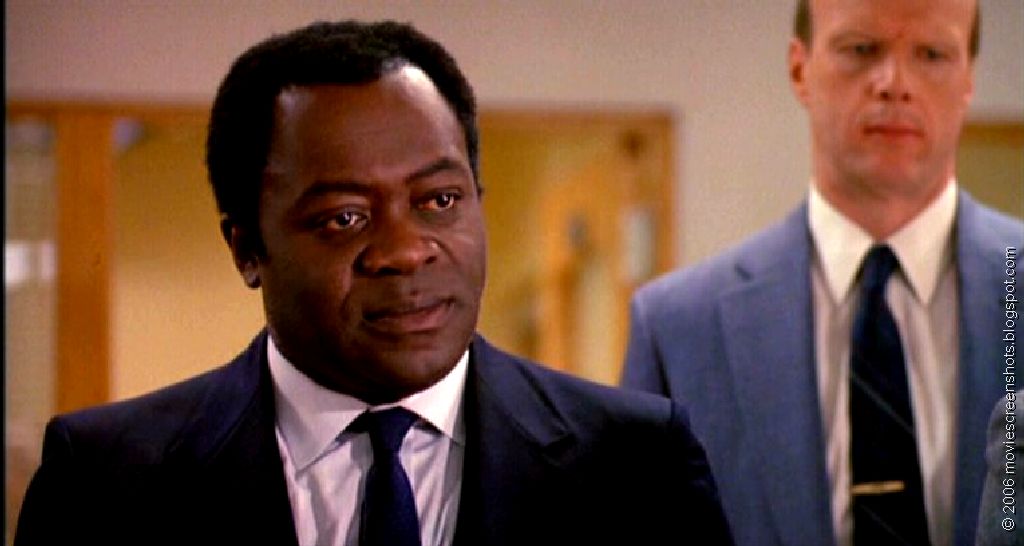
Yaphet Kotto (LIVE AND LET DIE, ALIEN) plays FBI agent Mosely in a quiet, understated way which makes his performance funny when he learns Jack has stolen his ID badge.  Mosely's seething but it's always internally, no histrionics or dramatic meltdowns.  The one actor whose performance is a bit disappointing and one dimensional is the great Dennis Farina as mob boss Jimmy Serrano. Serrano is the least fleshed out of MIDNIGHT RUN'S characters.  Yes, he has a history with Jack going back to Chicago and Serrano knows how to push Jack's button.   But Serrano's just a regular cardboard villain. Farina never really finds a way to bring any humor or empathy to the Las Vegas mobster.  Check out Farina in Barry Sonnenfeld's GET SHORTY (1995) with John Travolta and Gene Hackman or Steven Soderbergh's OUT OF SIGHT (1998) with George Clooney and Jennifer Lopez to see Farina at his best.

The musical score for MIDNIGHT RUN is very jazzy which will surprise movie fans when they find out the composer is Danny Elfman.  Elfman is best known as the composer for most of Tim Burton's films including BEETLEJUICE (1988), BATMAN (1989) and EDWARD SCISSORHANDS (1990).  Elfman's music is usually haunting and dramatic so it's nice to see him branching out in a different direction. Elfman's score for MIDNIGHT RUN was one of the first movie scores he did.

Although director Martin Brest has not made a ton of films, Brest has had an interesting up and down career.  Brest's reputation as a perfectionist may have contributed to his limited resume. Brest was the original director of WAR GAMES (1983) starring Matthew Broderick before he was replaced by John Badham. Some of Brest's scenes he directed are still in WAR GAMES.  Brest reached the pinnacle of his career directing Al Pacino to his Academy Award winning performance in SCENT OF A WOMAN (1992).  And it was Brest who directed the ill-fated GIGLI (2003) starring Ben Affleck and Jennifer Lopez that may have sunk his career due to the off-set romance and tabloid headlines with Affleck and Lopez that overshadowed the film (besides a terrible title and plot). 

But MIDNIGHT RUN is Brest during one of his best creative periods. Juggling multiple locations and an array of characters, Brest steers MIDNIGHT RUN confidently to a satisfying conclusion. DeNiro and Grodin are perfectly cast as an unlikely odd couple who form a bond even though DeNiro's Jack Walsh may be taking Grodin's Jonathan inadvertently to his death. A multitude of pursuers and an unlikely pair who become buddies, MIDNIGHT RUN is a satisfying combination of genres that entertains, thrills, and makes you laugh. No bail bond required.  


Sunday, July 3, 2022

Breaking Away (1979)

When I was a kid, I was a voracious reader of movie reviews. Film critics Richard Schickel and Richard Corliss from Time Magazine, Jack Kroll and David Ansen from Newsweek, and Ted Mahar from my local newspaper The Oregonian were my main sources. If the film was R rated, my parents weren't going to allow me to see it. Movie reviews were my only way to learn about the film if I couldn't watch it. I recall one summer in July reading a glowing review by Time Magazine's Richard Schickel for the PG rated film BREAKING AWAY (1979) about four high school kids in Indiana.  I was stunned as most film critics never praised a film (at least not the ones I was interested in). It didn't really appeal to me as it wasn't a horror film.  It was about bicycling. But BREAKING AWAY appealed to my best friend's mother.  I was over at his house one hot July day when she declared we were going to the movies.  When we asked what movie, she said "BREAKING AWAY." We weren't thrilled about her choice, but the theater would have air conditioning and we would probably have popcorn. BREAKING AWAY turned out to be one of my favorite movie experiences as a kid, a surprise movie with no special effects or explosions. Just good writing and likable characters including a high school kid obsessed with an Italian bicycling team as the hook.

BREAKING AWAY is a quintessential American movie so imagine my surprise when I discovered the man who directed BREAKING AWAY was an Englishman by the name of Peter Yates. Sometimes it takes someone who's an outsider or from another country to see an American story in a different perspective.  Would you believe that MIDNIGHT COWBOY (1969) about a cowboy gigolo and his crippled friend in New York City was directed by Brit John Schlesinger. Or the modern film noir classic CHINATOWN (1974) set in 1940s Los Angeles was made by Polish director Roman Polanski. Or the slick, neo noir Southern California thriller DRIVE (2011) starring Ryan Gosling was directed by Danish director Nicolas Winding Refn. In 1968, actor Steve McQueen hired Peter Yates to direct the American car chase classic BULLITT on the up and down streets of San Francisco after watching Yates handling of an exciting car chase scene in downtown London in the British crime thriller ROBBERY (1967).  A little over a decade later, Yates would helm a quiet, slice of life sports film called BREAKING AWAY set in the Midwest college town of Bloomington, Indiana. The other outsider is screenwriter Steve Tesich, born in Serbia who attended Indiana University and based BREAKING AWAY on a fraternity brother Tesich was friends with who rode in the Little 500 bicycle race which is the setting for the finale of the film. 

Directed by Peter Yates with an Academy Award winning original screenplay by Steve Tesich, BREAKING AWAY is a coming-of-age film set in Bloomington, Indiana about four 19-year-old friends who have recently graduated from high school but are in the crossroads of their young lives, struggling to make their next choice in life.  In this college town where Indiana University is located, the boys are known as "cutters." They're from working class families, their fathers all worked at the local limestone quarry before most of the quarries closed. One quarry has become a favorite swimming hole and place to reflect and goof off for the boys.  Dave Stohler (Dennis Christopher) is obsessed with bicycling and Italian bike racing, immersing himself in all things Italy including speaking Italian to his exasperated Dad - Ray Stohler (Paul Dooley), a former "cutter" who now owns a used car lot and his more understanding Mom- Evelyn Stohler (Barbara Barrie). Mike (Dennis Quaid) is a former high school football star with a chip on his shoulder. The diminutive Moocher aka Mooch (Jackie Earle Hayley) is easy going unless someone calls him "shorty." And the lanky Cyril (Daniel Stern) is the not so smart former high school basketball player unsure what his future holds.

Cracks begin to develop with the four friends staying together. Dave begins a flirtation with a pretty college coed Katherine (Robyn Douglass), pretending to be an Italian Exchange Student much to the chagrin of Katherine's frat boy boyfriend Rod (Hart Bochner). Mooch realizes he needs to get a job and thinks about tying the knot with his girlfriend Nancy (Amy Wright).  Cyril contemplates taking a college entrance exam. Mike hates that the rich college kids like Rod and his friends come to their quarry swimming hole.  When Dave and Cyril serenade Catherine at her sorority, Rod shows up with his frat brothers looking for Dave and beat up Cyril by mistake. Mike wants revenge. Mike and Mooch start a fight in the college cafeteria forcing Mike's cop brother (John Ashton) to break up the melee. Dave becomes excited when he learns his favorite Italian bike race team -Team Cinzano - is coming to Bloomington to race in the Cinzano 100. Dave trains for the race while driving his Dad crazy with Italian food for dinner and shaving his legs (wind resistance) for the upcoming race.

The big day arrives - the Cinzano 100.  Dave gets to race against his idols.  Team Cinzano races to the front but Dave catches up to them.  He tries out his Italian on the team. Team Cinzano responds by sabotaging his bike, causing Dave to crash. His idols aren't what he dreamed they were. As Dave confesses to his Dad, "Everyone cheats" (his Dad selling lemon cars to customers, Team Cinzano) I just didn't know". Dave takes down his Italian posters and drops the Italian accent. Dave reveals to Katherine he's not an Italian Exchange Student. Just Dave from Bloomington, a "cutter." She slaps him and runs off in tears. Dave and his Dad begin to bond. Because of the cafeteria fight and the frat boys involvement in it, the University has decided to allow a local team to race in the upcoming Little 500 (a two hundred lap bike race made up of four riders). The Cutters can have a team. Mike rallies his friends, finding a piece of junk bike that they can use.  But Dave is done with bike racing. He wants no part of it.

One night, Dave and his Dad take a walk through the Indiana University campus. Many of the buildings on the campus have stone that Ray cut. Ray reveals he's proud of his work but was ashamed to walk through the campus since he never went to college. Dave runs into Katherine who's moving to Chicago and going on a trip to Italy with her parents.  Dave wishes Catherine the best. Suddenly proud to be a "cutter", Dave fixes up the bike Mike found. The four of them are going to race in the Little 500.  Dave's Mom makes t-shirts for the boys with CUTTERS across the front.  BREAKING AWAY culminates with the Little 500 bike race with the Cutters racing against many Indiana University teams including Rod and his fraternity brothers.  Dave puts the Cutters in the lead before taking a fall and injuring his leg.  Mooch, Cyril, and Mike take turns riding until Dave gets patched up. Inspired by his friends determination, Dave gets back on the bike and finishes the race, narrowly beating Rod at the finish line. 

One of the themes that jumps out in BREAKING AWAY is class distinction. Indiana University is an affluent college located in the working-class town of Bloomington. The kids going to Indiana University are rich kids like Rod and Katherine. The kids that grew up in Bloomington like Dave and Mike and Mooch and Cyril are from blue collar families, called "cutters" by the college kids because their parents a generation before worked at the local quarry. The Cutters are smart kids who have allowed the college frat boys and their parents' prejudices to make them think they're not worthy enough to go get an education.  It's a badge of honor that none of them are college bound. Dave and Mike and Mooch and Cyril are like four blue collar Musketeers. Dave's Dad Ray scoffs at Dave going to college.  Ray was working while in high school. He didn't need college. Mike holds a grudge against Indiana University for not offering him a football scholarship. The Cutters and the rich college kids will clash whether fighting in the university cafeteria or at the quarry swimming hole or racing against each other in the Little 500 bike race. The Cutters feel they have something to prove to their elitist counterparts.

The clever title BREAKING AWAY has many meanings. In the literal sense it means outdistancing oneself from the competition like Dave winning local bike competitions or later Team Cinzano pulling away from the pack in the Bloomington 100 bike race. But the title also comes to mean "breaking away" from indifference. The boys are stuck in neutral. They're too good to go to college, too proud to find jobs or pursue any real future.  It's a badge of honor that they're just loafing around. That will change. Mooch realizes he'll need a job, need an income if he wants to marry his local sweetheart, Nancy. Dave begins a relationship not with a local gal but an Indiana University sorority girl Catherine, an outsider.  Cyril, the laziest of them all, contemplates taking a college entrance exam.  Mike wants to just relive the past. To Mike's consternation, his friends are considering "breaking away" from Bloomington, from their swimming hole and their juvenile pranks and hijinks. Their "breaking away" to adulthood.

After Dave is humiliated by the Italian Team Cinzano bike team, he has to break away from his obsession with all things Italian including bicycling.  Hiding behind his fake accent and listening to Italian opera music, Dave finally accepts he's a "cutter" but also just a normal kid, trying to figure out what he wants to be in the world. Ray, Dave's father, will have his "breaking away" moment.  Ray, a true "cutter" who worked in the quarries, broke away from that tough blue-collar job to start his own business - selling used cars. But he's still blue collar. He didn't go to college. He's still uptight about change, his son pursuing college, or trying any food other than American. When Ray sees his son's anguish that his bicycling heroes cheat, that his own father cheats to a degree in the car business, Ray breaks away from his past prejudices, opening himself to his son and to change both for their family and his business. 

BREAKING AWAY falls into two movie genre categories: the sports underdog story and the coming-of-age story.  The 1970s was a big decade for the underdog sports themed movies.  From Michael Ritchie's THE BAD NEWS BEARS (1976) starring Walter Matthau, Tatum O'Neal, and BREAKING AWAY'S Jackie Earle Haley about a misfit Little League Team to John G. Avildsen's ROCKY (1976) about small time Philadelphia boxer Rocky Balboa (Sylvester Stallone) fighting the Heavyweight Champion of the World Apollo Creed (Carl Weathers) to Hugh Hudson's CHARIOTS OF FIRE (1981) chronicling two completely different British distance runners competing in the 1924 Olympics (with an appearance by BREAKNG AWAY'S Dennis Christopher), sports underdog films have always captivated audiences. Personally, I almost always root for the little guy or gal in sports to overcome the bigger, stronger opponent or team. I'm not a fan of dynasties or long reigns by one athlete.  Sports underdog films are still popular today in films like David Anspaugh's HOOSIERS (1986) with Gene Hackman, Dennis Hopper, and Barbara Hershey about a small high school basketball in 1954 that makes it to the Indiana State Basketball Championship or Gavin O'Connor's MIRACLE (2004) about the amateur U.S Men's National Hockey Team beating the mighty Soviet Union in the 1980 Lake Placid Winter Olympics.  

The coming-of-age story is also central to BREAKING AWAY. The root of the film is the four nineteen-year old's trying to figure out their futures. Screenwriter Tesich gives each boy a meaningful speech in the film, juicy dialogue that young actors today would die to have written for them.  Coming of Age films started to appear in the early 70s with Robert Mulligan's SUMMER OF '42 (1971) with young Gary Grimes falling in love with older Jennifer O'Neill. George Lucas's AMERICAN GRAFFITI (1973) captures one night for four recent high school graduates (Ron Howard, Richard Dreyfus, Paul LeMat, and Charles Martin Smith) before one of them heads off for college. Four main characters (with multiple supporting characters) seems to be the right number for coming-of age films. AMERICAN GRAFFITI, BREAKNG AWAY, and later Rob Reiner's STAND BY ME (1986) all have four main characters.  But Barry Levinson's ode to his youth in 1959 Baltimore in DINER (1982) has five main characters (Mickey Rourke, Kevin Bacon, Steve Guttenberg, Tim Daly, and BREAKING AWAY'S Daniel Stern) and takes place right after college. 

For actors Dennis Christopher, Paul Dooley, and Barbara Barrie, BREAKING AWAY gave them the role of a lifetime...literally. Even though all three actors would appear in many more films and television shows, their performances in BREAKING AWAY are the pinnacle of their careers in my opinion. For Dennis Christopher who plays Dave Stohler the young Italian enthusiast, that's a little sad as BREAKING AWAY was early in his career. Because of BREAKING AWAY, I remember catching Christopher soon after in a creepy little horror film called FADE TO BLACK (1980) in which he played against his All-American kid type as a film buff turned serial killer. He also appeared briefly in CHARIOTS OF FIRE as an American distance runner. Scanning through his IMDB filmography, Christopher bounced around in various supporting roles but never really landed another leading role like Dave in BREAKING AWAY or even a reoccurring role in a TV series until that savior of forgotten film stars Quentin Tarantino (who resurrected John Travolta's career with PULP FICTION) cast Christopher in DJANGO UNCHAINED (2012) as Leonide "Leo" Moguy, a gambler and associate of Leonardo DiCaprio's villainous Calvin Candie. 

Paul Dooley who plays Dave's father Ray Stohler in BREAKING AWAY takes the role of the exasperated parent and makes it three dimensional. Dooley could have played Ray as a grumpy, mean, foul-mouthed Dad like many actors might have. Instead, Dooley makes those tense confrontations humorous (screenwriter Tesich's excellent dialogue helping as well). In BREAKING AWAY, we see Ray transform from a stubborn patriarch to a caring, open-minded father. Dooley was a favorite of director Robert Altman appearing in Altman's A WEDDING (1978), A PERFECT COUPLE (1979) and as the hamburger loving Wimpy in POPEYE (1980).  Dooley would play Molly Ringwald's sympathetic father in John Hughes SIXTEEN CANDLES (1984) and he made a brief appearance as a hockey announcer in another underdog sports film SLAP SHOT (1977) directed by George Roy Hill and starring Paul Newman. Dooley's excited performance in that film hints at what's to come in BREAKING AWAY. 

Barbara Barrie as Dave's Mom Evelyn counterbalances her agitated husband. Evelyn is the rock of the family, keeping them centered with her compassion and empathy. Evelyn even becomes enthralled with Dave's obsession with all things Italian including opera music which sparks her romantic side leading to an amorous evening with her husband. I'm not sure I ever saw Barrie in anything else (turns out she appeared the next year in 1980s PRIVATE BENJAMIN which I have seen) but it wouldn't matter. BREAKING AWAY is the role of her career.  Barrie would actually star in a TV version of BREAKING AWAY that lasted for one year in 1980-81 reprising her role as Evelyn Stohler. Jackie Earle Haley would return as Moocher. Replacing Dooley as her husband would be Vincent Gardenia and Shaun Cassidy took over the role of her son Dave. 

The actors who play Dave's "Cutter" buddies have continued on to lengthy successful careers.  You might have heard of Dennis Quaid who plays Mike, the ex-high school quarterback.  With his Cheshire cat grin and good looks, BREAKING AWAY was very early in Quaid's career and would be his calling card to leading man status. Quaid has played a wide range of roles from astronaut Gordon Cooper in Philip Kaufman's THE RIGHT STUFF (1983) to singer Jerry Lee Lewis in Jim McBride's GREAT BALLS OF FIRE (1989) to Steven Soderbergh's ensemble cast drug war film TRAFFIC (2000). In BREAKING AWAY, underneath Mike's tough guy exterior, there's a young man afraid to leave his past Jackie Earle Haley who plays Moocher is one of those actors who bridged the gap from child to adult actor with some gaps in between. With good roles early in his young career in THE BAD NEWS BEARS and BREAKING AWAY, Haley's career did not take off like Quaid's.  Haley barely worked much in the 80s and 90s before making a comeback as a suspected child molester in Todd Field's LITTLE CHILDREN (2006) with Kate Winslet and Patrick Wilson and then as vigilante superhero Rorschach in Zach Snyder's WATCHMEN (2009).  Haley's Moocher is goofy and gentle except when provoked with jokes and taunts about his short stature.  

For Daniel Stern who plays Cyril, BREAKING AWAY would be his film debut. Besides Dennis Quaid's Mike, Cyril may be the saddest of the four "cutters" even though Cyril has all the funniest lines.  Cyril uses humor as a defense mechanism for his failure to make much of his life so far. When the Cutters win the Little 500, Dave, Mike, and Moocher all have a family member race up to hug them. Only Cyril is left looking for a familiar face to share his happiness, but none emerges, hinting that Cyril's future may not be so rosy. But actor Stern would go on to roles where he had friends or cohorts in films like DINER, Chris Columbus's HOME ALONE (1990) with Macaulay Culkin and Joe Pesci, and Ron Underwood's CITY SLICKERS (1991) with Billy Crystal and Jack Palance.  Stern also served as the narrator and directed several episodes of ABC's THE WONDER YEARS (1988 - 1993).

Stern should have received an "Introducing" credit since it was his first film but instead that went to actress Robyn Douglass who plays Dave's love interest, sorority girl Katherine. Douglas makes Katherine interesting, showing some depth as she's torn between her Greek life and this quirky supposed Italian student aka Dave. Douglass appeared in a few TV shows in the 80s but appears to have given up acting in the early 90s. Hart Bochner (son of actor Lloyd Bochner) plays BREAKING AWAY'S villain role as confident frat boy and Little 500 adversary Rod from Texas.  Bochner would play another college student in Roger Spottiswoode's slasher film TERROR TRAIN (1980) with Jamie Lee Curtis. But Bochner's best remembered role is as Bonnie Bedelia's sleazeball co-worker in John McTiernan's action film DIE HARD (1988) with Bruce Willis. Look for PJ Soles (HALLOWEEN) as Katherine's fellow sorority sister (Soles was dating Dennis Quaid at the time) and John Ashton (BEVERLY HILLS COP, MIDNIGHT RUN) as Quaid's local cop brother. 

Director Peter Yates would have an eclectic film career.  He would reteam with screenwriter Steve Tesich on EYEWITNESS (1981), a Hitchcock like thriller starring William Hurt and Sigourney Weaver. Yates worked in every genre from crime dramas like BULLITT and THE FRIENDS OF EDDIE COYLE (1973) to adventure in THE DEEP (1977) with Nick Nolte and Jaqueline Bissett based on Peter Benchley's novel to the period drama THE DRESSER (1983) starring Albert Finney based on a stage play and even directing the fantasy dud KRULL (1983).  Yates's BREAKING AWAY seems like an anomaly in his filmography, a sweet film capturing a slice of life in the heartland of the United States. It may be one of the best films set in America made by none other than an Englishman.

Little did I know that my friend's mother taking us to see BREAKING AWAY that hot summer July day would change my view of watching movies.  There was more out there than horror and fantasy films. Movies about normal people in normal situations could be just as engaging. I believe the next normal film I would see in this vein would be Robert Benton's KRAMER VS KRAMER (also 1979) about of all things -divorce and its consequences on the couple and their only son. In my own way, I was "breaking away" from just watching one type of film to enjoying all types, styles, and genres. My cinematic journey was about to begin.  


Sunday, June 5, 2022

Ray (2004)

It was a couple of summers ago while on vacation that my friend Dan told me something about the singer and performer Ray Charles that I had never heard before.  I can't remember what the fact was, but it made me realize that I didn't know very much about Ray Charles even though I had seen him perform on television many times in my youth.  I knew he was African American, but I didn't know where he had grown up or how he became a musician.  I knew he was blind, but I had never heard how or when he became blind.  I knew he was famous for singing "Georgia On My Mind" but was Ray Charles from Georgia? Now, it would be easy to go on the Internet and Google Ray Charles but then I remembered that there was a movie biopic about Ray Charles that starred Jamie Foxx (COLLATERAL) as Ray.  In fact, Jamie Foxx won the Academy Award for his portrayal of Ray Charles in RAY (another piece of information I had forgotten). 

CRAZYFILMGUY has had a love/hate relationship with biopics about music entertainers especially rock stars or bands/groups. From Oliver Stone's THE DOORS (1991) to the more recent BOHEMIAN RHAPSODY (2018) about Queen's front man Freddie Mercury or ROCKETMAN (2019) chronicling  Elton John's life, these biopics all begin strongly with the rise from obscurity and overcoming obstacles to become a huge star. But inevitably, the second half of these films show the singer or band begin to succumb to the excesses of fame: drugs, alcohol, sex, and self destructive behavior. The filmmakers seem to revel more in the excess and not enough on the music. Yes, in most cases, the singer or band get a second chance or rebirth or epiphany and rise again in the third act. But as a viewer, I'm worn out by their Bacchanalian behavior. 

Since I don't know Ray Charles's background, it will be interesting to see if his life follows this pattern. I have a feeling it will but how the filmmakers handle Ray's story will be the litmus test.  RAY was directed by Taylor Hackford, better known for AN OFFICER AND A GENTLEMAN (1982) with Richard Gere and Debra Winger and his modern remake of the classic film noir classic OUT OF THE PAST (1947) called AGAINST ALL ODDS (1984) starring Jeff Bridges and Rachel Ward. But when Hackford wasn't making dramas, he dabbled in music-oriented films like THE IDOLMAKER (1980) and the ballet drama WHITE NIGHTS (1985).  Hackford even directed music videos for Phil Collins and Lionel Ritchie and a star studded documentary about Rock and Roll legend Chuck Berry called CHUCK BERRY: HAIL! HAIL! ROCK 'N' ROLL (1987)

With a screenplay by James L. White based on a story by Taylor Hackford and James L. White, RAY tracks Ray Charles's life from northern Florida in 1948 to Atlanta, Georgia in 1979 with many stops in between. Already blind, Ray Charles Robinson (Jamie Foxx) uses his blindness along with his cleverness to get on a bus from Florida to Seattle where he meets the then unknown Quincy Jones (Larenz Tate). Ray plays his first gigs at a local Seattle club. His piano prowess brings in the crowds but Ray's exploited by the bar's owner/manager Marlene (Denise Dowse) and band member Gossie McGee (Terrence Howard). Ray signs a record deal with Jack Lauderdale (Robert Wisdom) who runs Swing Town Records (Jack has Ray drop his last name Robinson and go by Ray Charles instead). Ray travels the country playing for singer Lowell Fulson (Chris Thomas King). It's during this first tour that Ray is introduced to heroin by his bandmates Fathead Newman (Bokeem Woodbine) and Joe Adams (Harry Lennix).

Throughout the film, RAY has flashbacks to Ray Charles's youth, living with his single mother Aretha Robinson (Sharon Warren) and little brother George (Terrone Bell) on a sharecropping farm in Georgia. The flashbacks include Ray losing his brother to a freak drowning accident in a wash basin, becoming blind at the age of 6, and learning to deal with and overcome his blindness. Back in the present, Ray begins scoring with the ladies. After leaving Fulson's group, Ray's contract is picked up by Ahmet Ertegun (Curtis Armstrong), the Turkish founder of Atlantic Records and his partner Jerry Wexler (Richard Schiff). The three of them try to figure out Ray's niche. Ray can play and sound like anyone, but Ahmet wants him to be distinct. Ray records one of Ahmet's songs "The Mess Around" which becomes a hit. Ray strikes up a relationship with a shy choir singer and daughter of a preacher Della Bea (Kerry Washington).

Ray convinces Ahmet and Jerry he can go on the road and tour under his own name. Ray mixes gospel music with rhythm and blues.  Audiences love the sound although Della is not crazy about it.  Ray returns home after the tour and marries Della.  Della becomes pregnant just as Ray gets ready to tour again. Della discovers Ray's heroin kit and begs him to stop. Ray brushes it off.  Ray hires singer Mary Ann Fischer (Anjanue Ellis) to add a female presence to his band.  Ray sleeps with Mary Ann while on the road then returns home as Della gives birth to their first child.  With his growing popularity, Ray hires an all girl trio "the Raylettes" to back him up. Ray begins an affair with the lead singer Margie Hendricks (Regina King) which sends Mary Ann packing her bags to pursue a solo career.

As Ray's musical career continues to soar, his personal life begins to crumble. Ray debuts an original song at a club called "What'd I Say" that no one has ever heard and he's never recorded. It becomes a hit on the Pop charts. Ray's new agent Milt Shaw (David Krumholtz) gets Ray a better deal with ABC Records and Ray leaves Ahmet and Jerry at Atlantic. Ray and Della move to Los Angeles. Margie discovers she's pregnant with Ray's child but Ray won't leave Della.  Ray writes "Hit the Road Jack" which becomes another hit. Margie leaves the trio (and later dies of a drug overdoses). Ray's heroin habit becomes worse and his personal relationships with his original tour manager Jeff Brown (Clifton Powell) and wife Della sour. While returning to the States from a concert in Montreal, Canada, Ray is arrested for drug possession. With the possibility of losing his music and his family, Ray checks into a rehab clinic and kicks his heroin habit. RAY concludes in 1979 with the state of Georgia apologizing for banning him from performing in the state years earlier. State officials make "Georgia On My Mind" the official state song of Georgia. 

Does RAY fall into the pitfalls of many musical biopics and dwell too much on the excesses of fame and not enough on the music?  Surprisingly, it does not.  RAY is an even-handed look at an incredible life with bumps and warts along the way.  The filmmakers make an interesting choice by starting the film not when Ray Charles was a child but in 1948 as he begins his career as a musician.  But director Hackford inserts flashbacks to Ray's childhood throughout the film, revealing Ray's poor upbringing and the demons that lead him to begin abusing drugs as an adult. RAY doesn't gloss over Ray's drug use and womanizing but the film always moves forward, spotlighting Ray's meteoric rise from playing a little jazz bar in Seattle to performing at auditoriums and arenas. 

My concern was RAY might glamorize the dark side of fame as many biopics about entertainers do and gloss over the music.  Not to worry. RAY has plenty of Ray Charles's music.  What's incredible is all the musical genres that he dabbled in.  Jazz, Christian, mixing Christian with R&B, Pop, and even Country & Western. Ray was always changing his style and staying ahead of the curve when it came to his music.  RAY also explores the discrimination that he had to deal with not just with his skin color but with his blindness. His first manager, his fellow musicians, they all tried to take advantage of his lack of sight.  Initially, Ray would use his handicap to smartly shield himself from racism. Ray's blindness leads him into becoming a savvy businessman when dealing with music industry promoters and executives. 

Give credit (and the well-deserved Academy Award for Best Actor) to Jamie Foxx for his portrayal of Ray Charles in RAY.  Most of the film, I thought I was watching the actual Ray Charles.  It's rare where you don't think once or twice during a film "that's Jamie Foxx playing Ray Charles." But Foxx's performance is that impressive. The way he moves his head like Ray did when performing, how naturally Foxx tackles someone who has lost their sight, the way Foxx talks like Ray Charles. It is a chameleon like performance. Sadly, the real Ray Charles would pass away in 2004 from liver failure a few months before his life story was released in theaters. But he gave his blessing to the film project about his life before filming began, requesting only a few minor changes. The real Ray Charles even appeared as himself in John Landis's 1980 comedy THE BLUES BROTHER starring John Belushi and Dan Aykroyd.

Although Jamie Foxx has a musical background, he began his career as a comedian before becoming one of the cast members on the Fox comedy series IN LIVING COLOR (1991-1994). He followed that series with his own TV show THE JAMIE FOXX SHOW (1996-2001) before branching out into serious films like Michael Mann's COLLATERAL (2004) with Tom Cruise, Bill Condon's DREAMGIRLS (2006) with Eddie Murphy and Beyonce, and as the title character Django in Quentin Tarantino's DJANGO UNCHAINED (2012) with Leonardo DiCaprio and Christoph Waltz. 

RAY boasts two strong female performances by actresses who are well known today but were early in their careers when RAY was released.  Kerry Washington has the unenviable role of Ray's wife Della, the quiet unassuming daughter of a preacher who marries Ray and then suffers through his infidelities and drug habit.  Della could be a one-dimensional spouse character, but Washington evolves her from a shy young woman to a strong wife and mother who stands up for herself and their family and makes Ray face the hard truth about his actions including missing his son's baseball games. Washington would become the star of the hit ABC drama SCANDAL (2012-2018).  She and Jamie Foxx would also appear together again in DJANGO UNCHAINED. 

Regina King has the showier role of Margie Hendricks in RAY, one of the Raylettes backup singers who has an affair and becomes pregnant with one of Ray's children. King had been popping up in small roles early in her career including Cameron Crowe's JERRY MCGUIRE (1996) as Cuba Gooding, Jr's wife. Today, she is an Academy Award winning Best Supporting Actress for IF BEALE STREET COULD TALK (2018) and an acclaimed director of ONE NIGHT IN MIAMI ... (2020). King's Margie becomes caught up in the fame and success as Ray's backup singer and lover which leads to a tragic end. One last shout out to a favorite supporting actor of mine with the coolest name: Bokeem Woodbine.  Woodbine appears as fellow band member Fathead Newman in RAY. Woodbine caught my attention in Season 2 of the FX TV Series FARGO as a charismatic contract killer. Fathead and Ray have a love/hate relationship throughout his career as Fathead is like a second brother. 

RAY passes the CrazyFilmGuy test for music biopics. The film doesn't glamorize Ray's drug use and womanizing.  It simply shows that as talented as Ray Charles was, he had his flaws. RAY highlights the incredible tenacity of a young blind, black man to forge his career despite terrible obstacles and become one of our most celebrated entertainers. Making RAY special is Jamie Foxx as Ray Charles, creating a truly life like performance.   


Sunday, May 1, 2022

Paths of Glory (1957)

 "War!  What is it good for?  Absolutely nothing, say it again!"  That anti-war anthem sung by Edwin Starr is as true today with Russia's indiscriminately and unprovoked invasion of Ukraine as it was when Starr sang War in the early 1970s, a Motown protest song to the Vietnam War. Growing up, young boys like myself saw war as a fun game, a chance to play soldiers in an imaginary battle.  I often played with little green soldiers in my room or backyard. When I watched war movies, it was all explosions and make believe, the Nazis always the bad guys, the Americans and English the victors. But the reality is war is hell, plain and simple.  There are no easy winners and losers, just destruction and death and misery. 

Hollywood made plenty of patriotic war films during World War II to keep morale in America high.  But anti-war films have always been around from the dawn of the sound film beginning with Lewis Milestone's ALL QUIET ON THE WESTERN FRONT (1931) and Jean Renoir's GRAND ILLUSION (1937). Like those two films, Stanley Kubrick's PATHS OF GLORY (1957) based on the novel by Humphrey Cobb also takes place during World War I, one of the most futile wars ever fought that caused eight million military deaths. Never had so many men died for so little.  Mostly fought through trench warfare, victory was often determined by gaining a few feet of land which would often be lost the next day. PATHS OF GLORY is based on an actual historical event in World War I where five French soldiers were executed by firing squad by their own superiors for cowardice. This absurdity of war appealed to a young wunderkind director by the name of Stanley Kubrick. 

Kubick, who began his career as a young photographer for LOOK magazine, would kick off his directorial career alternating between film noir films like KILLER'S KISS (1955) and THE KILLING (1956) and war films like FEAR AND DESIRE (1953) and PATHS OF GLORY, his fourth feature film. PATHS OF GLORY would be Kubrick's first film with a major Hollywood star in Kirk Douglas (LUST FOR LIFE, GUNFIGHT AT THE O.K. CORRAL) and would signal to the cinematic world that a new major talent had emerged. 

Directed by Stanley Kubrick with a screenplay by Kubrick, Calder Willingham (THE GRADUATE), and pulp novelist Jim Thompson (who received a Dialogue credit in Kubrick's THE KILLING), PATHS OF GLORY takes place during World War I in France, 1916. The German army has pushed within 15 miles of Paris when the French army rallies and halts the German surge. General George Broulard (Adolphe Menjou) arrives at a sprawling, opulent French chateau to speak with his fellow officer General Paul Mireau (George Macready). Broulard and his superiors want Mireau's division to take the Ant Hill, a German position of high ground a few hundred yards from the French line. Mireau tells Broulard the mission is impossible.  Broulard dangles a promotion to Mireau who takes the bait.

Mireau and his sycophantic right hand man Major Saint-Auban (Richard Anderson) inspect the French soldiers in the trenches as they visit Colonel Dax (Kirk Douglas) a former criminal lawyer turned officer. Mireau orders Dax and his men to take the Ant Hill. Dax like Mireau knows it's a suicide mission. But Dax accepts the mission having no other choice.  That night, Dax sends three men out on a reconnaissance patrol into No Man's Land before the morning's raid: the drunken and cowardly Lieutenant Roget (Wayne Morris), the stoic Corporal Philippe Paris (Ralph Meeker), and Private Lejeune (Kem Dibbs).  The mission goes awry when Roget panics, accidentally killing Lejeune with Cpl. Paris a witness to it.  Before Paris can report Roget's negligence back at camp, Dax walks in and requests Roget's intelligence report. The regiment prepares for the morning assault.

It's supposed to be a surprise attack, but explosions and chaos await the French army. Dax valiantly leads his troops to rush the Ant Hill but it's useless.  One division, led by the craven Roget, hasn't even left the trenches. Furious that the troops are either turning back or never left the trenches, Mireau orders Sergeant Boulanger (Bert Freed) to turn artillery on Roget's division to get them to fight.  Boulanger refuses without written orders.  Back at the chateau after the failed assault, Mireau saves face by requesting a court martial and firing squad for one hundred men for "cowardice in the face of the enemy." Dax defends his regiment and the conditions they faced to no avail. Broulard talks Mireau down to trying three men. One man from each company will be chosen by that company's commanding officer to be tried and if found guilty executed.  Dax requests to represent the accused which Broulard allows.

Lt. Roget selects his nemesis Cpl. Paris to be one of the accused.  The other two men chosen are the decorated Private Pierre Arnaud (Joseph aka Joe Turkel) and the malcontent Private Maurice Ferol (Timothy Carey). The trial takes place at the chateau, presided by an impatient Court Martial Official (Peter Capell). Maj. Saint-Auban leads the prosecution. The trial is Kafka-esque with the three officers obviously not guilty but the court and Mireau's ego are stacked against them. Even with Dax's competent defense, the three soldiers are found guilty. That night, the three men receive their last meal. Father Dupree (Emile Meyer) comes to take their confession. Arnaud attacks the priest and Paris knocks Arnaud unconscious defending Dupree. Dax visits Gen. Broulard at a swanky officer party to tell him he has sworn testimony that Mireau ordered artillery on his own troops.  The next morning, Paris, Arnaud, and Ferol are shot by firing squad.  In the aftermath, Broulard turns on Mireau, informing him there will be an inquiry about his orders to fire on his own company. Mireau storms out. Dax turns down Broulard's invitation to be promoted to Mireau's position.  Dax wanders by a nearby cafe. Inside, a sleazy cafe proprietor (Jerry Hausner) forces a beautiful, naive German singer (Kubrick's future wife Susanne Christian later Christiane Kubrick) to sing in front of a bar full of French soldiers. At first, the soldiers whistle and catcall but her singing bring the war weary soldiers to tears. As Dax listens to the singing, Sgt. Boulanger shows up. They have orders to return to the front. 

Prior to 1957, I don't think a film captured the insanity of war like PATHS OF GLORY does. Kubrick shows us the madness right from the very beginning all the way to the end.  Old French generals and politicians, far from the battle front, need some good press for their stalled killing machine aka war, so they order a suicide mission that is destined to fail. A drunk officer negligently kills one of his own men on a late-night patrol then sends the only witness to his misdeed to the firing squad. A medal seeking general, furious that his soldiers aren't sacrificing their lives for his glory, orders artillery on his own men to make them fight. When the mission is deemed an absolute failure, the only alternative for Gen. Mireau is to have his own men executed as a deterrent for future soldiers who fail to go to battle. 

Kubrick saves the most scathing hypocrisy for the trial and execution. We learn only Pvt. Ferol and one other soldier survived from their company during the attack. Ferol's choice was to go forward to his death or turn back. He retreated yet will now go to his death not by the enemy but his own army for his common sense. Pvt. Arnaud and his company never made it past their own barbed wire, pinned down by gunfire. A decorated soldier, Arnaud's past heroism means nothing to the court. Cpl. Paris was knocked unconscious by a falling comrade and never made it out of the trenches. Despite this fact, Paris is still on trial for cowardice. Col. Dax is never allowed to introduce witnesses or testimony to defend the three soldiers.  There is no written record of the trial. Their fate is preordained by the Court. Just before their execution, after Paris has cracked Arnaud's skull defending Father Meyer, there is hope that Arnaud can't possibly be shot due to his injury.  But Arnaud is tied to a stretcher, a huge bandage around his head, and propped up before the firing squad. Afterward, Gen. Mireau smugly sums up the execution by stating "the men died wonderfully." 

Kubrick would revisit the madness of war a few more times after PATHS OF GLORY.  In DR. STRANGELOVE (1964), Kubrick would take a darkly satiric viewpoint to Nuclear War between the U.S. and Russia. In Kubrick's second to last film FULL METAL JACKET (1987), Kubrick explores the dehumanization of the soldier from boot camp to combat in the Vietnam War.  PATHS OF GLORY and FULL METAL JACKET have similarities that I will explore momentarily. 

With PATHS OF GLORY, Kubrick's visual trademarks begin to materialize that will be repeated throughout his career. In PATHS OF GLORY, Kubrick pulls off long tracking shots in the trenches following Col. Dax and later, following Dax and the soldiers as they try to take the Ant Hill that are breathtaking.  Tracking shots and fluid camera movements will become a signature Kubrick style, popping up in BARRY LYNDON (1975) as the camera follows rows of British and Prussian soldiers marching toward each other to tracking the murderous Jack Nicholson chasing his son through a hotel garden maze in THE SHINING (1980) to Tom Cruise walking down the dark streets of London in EYE WIDE SHUT (1999).  The recent Sam Mendes World War I film 1917 (2019) is a homage to PATHS OF GLORY taking the tracking shot to a whole new level as the whole film consists of one continuous shot (with some clever editing). 

In PATHS OF GLORY, Kubrick films the courtroom trial inside the baroque French chateau like it's a cosmic game of chess, the parquet floor the chess board, the accused chess pieces, pawns about to be sacrificed by their superiors. This scene showcases another Kubrick visual trademark: symmetry.  The accused soldiers are perfectly spaced out, dividing the screen into three sections, the guards watching over them also positioned in perfect symmetry. Visual symmetry will appear again and again in Kubrick films from SPARTACUS (1960) to 2001: A SPACE ODYSSEY (1968)  to A CLOCKWORK ORANGE (1971), a byproduct of Kubrick's photography background and understanding of composition. 

Then, there is the tight Close Up, slightly at a low angle, known as the "Kubrick Stare", depicting the characters descent into some form of madness and dehumanization.  In PATHS OF GLORY, the close up is on Kirk Douglas trying to comprehend the unattainable goal of taking the Ant Hill. More memorable "Kubrick Stare" close ups include Sterling Hayden as General Jack D. Ripper in DR. STRANGELOVE discussing the takeover of his bodily fluids as he initiates World War III or Malcolm McDowell as Alex in A CLOCKWORK ORANGE contemplating his gang's next violent act or Jack Nicholson dealing with writer's block in THE SHINING as the Overlook Hotel he's caretaking for during the winter begins to drive him insane.  Or the dehumanization of Private Pyle (Vincent D'Onofrio) during boot camp in FULL METAL JACKET (1987).

I didn't realize it until this latest viewing how much PATHS OF GLORY has in common with FULL METAL JACKET. Different wars but the same scathing indictment of inhumane treatment of soldiers and recruits by superiors who follow military rules and codes of justice over rationality and human decency.  Kubrick likes the symmetry of soldiers. Both films have Kubrick's tracking shots as the camera floats by soldiers at attention whether at a firing squad in PATHS OF GLORY or in their barracks in FULL METAL JACKET (where Kubrick takes full advantage of a new invention called the Steadicam). Kubrick's camera tracks Dax from in front and behind as he wanders through the trenches before the big battle. In FULL METAL JACKET, the camera tracks a company through the burnt-out buildings of Hue as they hunt for a sniper. 

In PATHS OF GLORY, Gen. Mireau and Maj. Saint-Auban come across a shell-shocked soldier in the trenches.  The soldier begins crying when Mireau asks if he's married. Mireau strikes the private (a similar scene occurs between General George Patton and a wounded soldier in 1970's PATTON) and orders him removed from the regiment, calling him a "baby." This belittling of soldiers will progress to the dehumanization of recruits in FULL METAL JACKET as Gunnery Sergeant Hartman (R. Lee Ermey) turns a group of young men at boot camp into cold-blooded killers headed to Vietnam.

Kirk Douglas as Col. Dax is really the only sympathetic character in PATHS OF GLORY (besides the three accused soldiers). Sympathetic characters are hard to find in Kubrick films. Dax is keenly aware of the ludicrousness of the mission and helpless at the court martial (despite his legal expertise) to prevent the execution of three innocent men as basic human rights are trampled by a prejudiced military jury. Douglas has many of the best lines in the film in the trial scene. "... this Court Martial is such a stain, and such a disgrace. The case made against these men is a mockery of all human justice." Dax does manage to get General Mireau removed as commanding officer but in the end, Dax is recalled to the front lines to lead another charge to secure a few feet of French soil.  Douglas is the first big movie star Kubrick would work with and his clout got the film made.  PATHS OF GLORY would kick off Kubrick's incredible career. Douglas would ask Kubrick to return the favor when Douglas fired director Anthony Mann after a few weeks of shooting the Roman epic SPARTACUS (1960) and replaced him with Kubrick.  SPARTACUS is Kubrick's only big Hollywood studio film. 

Interestingly, Kubrick cast many of the supporting characters in PATHS OF GLORY with film noir actors, some he had worked with previously (even lead Douglas appeared in Jacques Tourneur's film noir classic OUT OF THE PAST). Having played complicated, dark anti-heroes and villains in noir, these actors were well suited to evoke the horror and dark side of World War I in PATHS.  Ralph Meeker who plays the doomed soldier Cpl. Paris was fresh off his searing role as tough private eye Mickey Spillane in Robert Aldrich's KISS ME DEADLY (1955). The tall and manic Timothy Carey as Pvt. Furol made noteworthy appearances in Andre De Toth's CRIME WAVE (1953) and as a racist sniper in Kubrick's THE KILLING. Joseph (Joe) Turkel, the third convicted soldier, also has a brief appearance in THE KILLING.  Kubrick would bring Turkel back later in their careers as the ghostly bartender serving Jack Nicholson drinks in THE SHINING.  Turkel also had a memorable role as the creator of replicants Dr. Eldon Tyrell in Ridley Scott's BLADE RUNNER (1982). Even Emile Meyer who plays the French priest Father Dupree appeared the same year of PATHS OF GLORY as a nasty cop in SWEET SMELL OF SUCCESS (also 1957).

Rounding out the film noir connection is actor George Macready who plays the ambitious General Mireau. Best known as the rich, mysterious smuggler/night club owner Ballin Mundson in Charles Vidor's GILDA (1946) co-starring Glenn Ford and Rita Hayworth, Macready is chilling in PATHS OF GLORY as Mireau's lust for power leads to hundreds of senseless deaths in battle. Macready had a real life crescent scar on his right cheek from a car accident that adds to his menace. Film fans my age will recognize Richard Anderson who played Oscar Goldman on ABC's THE SIX MILLION DOLLAR MAN (1974-78) as Major Saint-Auban, Mireau's obsequious right hand man and the prosecutor at the military trial in PATHS.  Anderson was a fine supporting actor in films like John Sturges ESCAPE FROM FORT BRAVO (1953) and FORBIDDEN PLANET (1956) before moving on to television later in his career. 

Lastly, we cannot forget the performance of the diminutive, suave Adolphe Menjou as the callous, manipulative General George Broulard, who puts in motion the disastrous events that unfold in PATHS OF GLORY.  Menjou had quite a career spanning silent films with Douglas Fairbanks in THE THREE MUSKETEERS (1921) and with Rudolph Valentino THE SHEIK (also 1921) to classics in the 30s like THE FRONT PAGE (1931) and A STAR IS BORN (1937). All you need to know about Menjou's Gen. Broulard is when Col. Dax spews at him "you're a degenerate, sadistic old man!"

With PATHS OF GLORY, Kubrick shows not only his visual and storytelling expertise but also how to get more production value out of limited resources.  Yes, PATHS OF GLORY was financed by MGM but it's not a gigantic production.  Kubrick (and his producing partner James B. Harris) utilize a German castle (standing in for a French chateau) for both expansive outdoor sequences like the military procession leading up to the execution while filming the court martial trial inside the castle with its long staircases and ornate interiors.  The assault on Ant Hill is not a very long sequence but with smoke, sound effects, and enough extras, the battle rivals bigger war epics in the 60's like THE BATTLE OF THE BULGE (1965). PATHS OF GLORY is an economically well made film that moves at a good clip and does not waste one scene to get its message across.

Watching Stanley Kubrick films is a joyous occasion like watching Alfred Hitchcock films.  Both men were auteurs.  Each of their films have themes, patterns, and visual motifs that movie fans will recognize over and over again but in different settings and plots. Kubrick would delve into science fiction with 2001: A SPACE ODYSSEY, historical drama in BARRY LYNDON, and the horror genre in THE SHINING but his unique cinematic signature shows up in each film. PATHS OF GLORY (and even THE KILLING before) is where the brilliance of Stanley Kubrick began.

Every country has committed disgraceful atrocities and behavior in the name of war: the United States, England, Germany, Japan, Turkey, Russia, and in PATHS OF GLORY, the French.  I began with lyrics from Edwin Starr's anti-war song War and it seems appropriate to end with his agonizingly truthful  words again.

War, I despise

'Cause it means the destruction of innocent lives

War means tears to thousands of  mother's eyes

When their sons go off to fight

And lose their lives