Sunday, June 28, 2020

The Razor's Edge (1946)

There is a time in our lives when we need to go somewhere and find ourselves, rediscover or reconnect, learn something new.  It could be for a weekend, a week, a month, a year, or longer. That time came for me after college. For sixteen years, I had been in school. Now I was on the cusp of adulthood, not certain what my job vocation would be. Before I was to enter the job market, I traveled to Europe for a couple of months to see different cultures, landscapes, people, and history.  It was one of the greatest times of my life.  THE RAZOR'S EDGE (1946), based on the novel by W. Somerset Maugham, is the story of one man's journey to seek enlightenment after returning home from the horrors of World War I.

During the Golden Age of Hollywood (which I consider the 30s thru the 50s), actors and actresses were often contracted to one studio for a defined period (although they could be loaned out to a rival studio from time to time). Humphrey Bogart, Errol Flynn, and James Cagney all had contracts with Warner Brothers. Spencer Tracy and Clark Gable were contracted with MGM.  THE RAZOR'S EDGE, made by 20th Century Fox, is full of Fox contract players. Lead Tyrone Power appeared in a variety of 20th Century Fox films including THE MARK OF ZORRO (1940).  Gene Tierney and Clifton Webb appeared in Fox's LAURA (1944) directed by Otto Preminger. And Anne Baxter who would win a Best Supporting Actress Academy Award for THE RAZOR'S EDGE would earn more rave reviews four years later in Fox's ALL ABOUT EVE (1950) directed by Joseph L. Mankiewicz. Fox Studio head Darryl F. Zanuck made sure he had all his best stars for THE RAZOR'S EDGE.


One of the things that made me want to watch THE RAZOR'S EDGE is its title.   What does it mean - the razor's edge? The term comes from a Hindu proverb. "The sharp edge of a razor is difficult to pass over; thus the wise say the path to Salvation is hard." Apparently, I wasn't the only one attracted to the title or the story.  Bill Murray, of all people, would not only star but co-write a remake of THE RAZOR'S EDGE in 1984 directed by John Byrum and co-starring Theresa Russell and Denholm Elliott (A ROOM WITH A VIEW). It would be Murray's first dramatic role . Although I have not seen the remake, the few articles I've glanced at indicate the more recent version was considered a bust after its release.

Directed by Edmund Goulding with a screenplay by Lamar Trotti based on the novel by W. Somerset Maugham (what a great name for a novelist), the 1946 THE RAZOR'S EDGE begins with the author W. Somerset Maugham (Herbert Marshall) passing through Chicago in 1919 and attending a party thrown by his wealthy expatriate friend Elliott Templeton (Clifton Webb) who's back in town to visit his sister Louise Bradley (Lucile Watson). Elliott's niece Isabel Bradley (Gene Tierney) is engaged to handsome Larry Darrell (Tyrone Power), a pilot recently back from World War I. Also in attendance at the party are Gray Maturin (John Payne) who's also in love with Isabel and Sophie MacDonald (Anne Baxter) a childhood friend of Isabel and Larry's. Templeton is not happy with Larry who has recently turned down a good job offer from Gray's wealthy father. Larry wants to "loaf" and travel. He's haunted by the loss of his friends who died in World War I. Isabel tells Larry to go travel before they get married. She'll wait for him. Larry takes her up on the offer and heads off for Paris.


Larry lives a bohemian life style in Paris as he seeks "the meaning of life."  Isabel and Elliott travel to Paris to visit Larry.  Isabel doesn't like Larry's free lifestyle.  She returns his engagement ring. Larry and Isabel have one last night out in Paris.  The passion is palpable but Isabel cuts it short.  She returns to Chicago and marries the more financially stable Gray. Larry finds himself working in a coal mine in France. He "doesn't believe in anything." One of his co-workers Kosti (Fritz Kortner), a former defrocked priest suggest Larry travel to India to seek enlightenment. Larry takes him up on the suggestion and makes the journey to India. Larry meets a Holy Man (Cecil Humphreys) who takes Larry up into the mountains where Larry rediscovers the beauty in life.

Larry returns to Paris.  He runs into Somerset who catches Larry up on his old friends.  Gray and Isabella were wiped out by the Crash of 1929 and lost everything.  Gray had a nervous breakdown. Elliott supports both of them and their two kids in Paris.  Somerset visits Isabel to tell her Larry is back in the city. Larry visits all of them in their apartment.  With what he learned in India, Larry cures Gray of his headaches with some simple mental exercises. They go to a working class French bar Rue de Lappe to celebrate and run into Larry's old childhood friend Sophie.  While Larry was away in India, Sophie was injured in a car accident in Chicago that killed her husband Bob MacDonald (Frank Latimore) and their daughter. Sophie moved to Paris where she's become a drunk. Moved by her misfortune, Larry helps Sophie to become sober. Larry and Sophie soon become engaged.


Isabel is furious that Larry and Sophie are to be married as Isabel has never stopped loving Larry. She's mad that Somerset doesn't agree with her. Somerset takes everyone out to the Ritz to celebrate the engagement. Isabel offers to buy Sophie a wedding dress as a token that she's not angry at Larry.  But when Sophie comes over to Isabel's apartment to try on the dress, Isabel tempts Sophie with a liqueur. Sophie relapses. Larry searches for Sophie, finding her in an opium den. Larry's beat up as he tries to recue her.  Sophie vanishes from Paris. Somerset returns to his residence on the French Rivera.  A year later, Somerset and Larry are reunited when Sophie's body is found in the harbor in Toulon. Larry is questioned but her murder remains unsolved. Elliott lays dying in Nice. Upset that he's not received an invitation from a princess he once helped, Larry visits the princess's secretary Miss Keith (Elsa Lanchester) and obtains an invitation, one last pleasure for Elliott before he dies. Larry decides to return to the United States via a steamer. Before he leaves, he questions Isabel if she provided alcohol to Sophie. Isabel admits to it. Larry reveals Sophie was murdered, a fact Isabel was not aware of. Isabel loses Larry for good as he returns to America.

THE RAZOR'S EDGE is a must see for any one like the protagonist Larry Darrell -- restless, self-sacrificing, and not attached to materialistic things.  Larry lives the bohemian life we all dream of. Moving to Paris. Biking through the countryside.  Taking classes at the Sorbonne. But he paid a price for this quest for self-fulfillment. Larry saw the horrors of World War I, saw a soldier killed saving his life. I liked Larry's attitude. When he returns from the Himalayas to discover his former fiancée is married to his best friend, he shows no jealousy, just love. Larry didn't know what he wanted in life after the war.  But his return from the Far East has given Larry a second chance. 


It's never implied in THE RAZOR'S EDGE but Larry, in a way, is like Jesus (both names even have five letters). Larry cures Gray from his terrible headaches and melancholy.  Larry helps his childhood friend Sophie when she's down and destitute and lifts her wayward soul back to the living. They get engaged. Larry even performs a good deed for the Elliott who never had a good word to say about him. While Larry shunned money, marriage, and a good job to search for something more meaningful in life, his more materialistic friends end up suffering setbacks and tragedy.  Larry harbors no ill feelings toward any of them.  Not even his ex-fiancée Isabel when she confesses she's the one who tempted Sophie back to the bottle, ultimately destroying Sophie's life.

Tyrone Power may have been better known for his swashbuckling roles in films like THE BLACK SWAN (1942) or PRINCE OF FOXES (1949) but he seems perfectly cast as everyman Larry Darrell who travels the world after his World War I experiences to seek enlightenment.  "If I ever acquire wisdom," Larry says, "I suppose I'll be wise enough to know what to do with it." Powers plays Larry with an even keel.  Larry never raises his voice, never judges, never shows too much or too less emotion. He's like a walking meditation. THE RAZOR'S EDGE and Power's next film, the film noir NIGHTMARE ALLEY  (1947) in which Powers plays a con man were two meaty roles that showed Powers could play more than pirates and knights. 

Opposite Powers is Gene Tierney who has the unenviable role of Isabel, Larry's former fiancee in THE RAZOR'S EDGE. Isabel cannot make a good choice for herself. Even though she encourages Larry to go to Paris, she ends up dropping him for the rich and established Gray. The Stock Market crashes and so does Gray and Isabel's fortunes. When Larry returns from India relaxed and different, Isabel reveals she's never stopped loving Larry. But Larry's too interested in helping others. Larry's engagement to Sophie drives Isabel mad with jealousy, causing her to make her greatest mistake -- tempting the newly sober Sophie with alcohol. Isabel's action will send Sophie spiraling to a terrible death and forever cut her off from the man she always loved but couldn't wait for - Larry Darrell. THE RAZOR'S EDGE is a good dramatic role for Tierney who appeared in several film noirs for 20th Century Fox including LAURA, WHIRLPOOL (1950), and WHERE THE SIDEWALK ENDS (1950) all directed by Otto Preminger. In a way, Tierney's Isabel is a femme fatale who can't see the good side in Larry's actions.


If you've never seen Anne Baxter in a film before, THE RAZOR'S EDGE is a good place to start. Unlike many actresses during that time period who played the same character over and over, Baxter had range. As Sophie MacDonald, Baxter arcs from the girl next door at the start of the film to a drunken harlot rescued by Larry if only temporarily. It's a tragic role and Baxter would win Best Supporting Actress as Sophie. Baxter probably should have won another Academy Award for ALL ABOUT EVE as aspiring actress Eve Harrington but fine performances by co-stars Bette Davis and Celeste Holm cancelled each other out for the award. Clifton Webb as Isabel's perennially grumpy rich uncle Elliott Templeton provides THE RAZOR'S EDGE with short bursts of humor. Elliott is a snob who loves to entertain. Elliott has "no friends, just acquaintances" Somerset tells Sophie at the film's opening party. Webb could play villains like in LAURA and as well as comedy such as the fastidious genius Mr. Belvedere in SITTING PRETTY (1948) and two other Belvedere sequels.

Although I had never heard or read about him before THE RAZOR'S EDGE, British director Edmund Goulding seems the perfect choice for the film. Goulding actually fought in World War I giving him some insight into Larry Darrell's psyche. Goulding directed the World War I flying film THE DAWN PATROL (1938) starring Errol  Flynn, David Niven, and Basil Rathbone.  Goulding was also familiar with author W. Somerset Maugham's works having directed OF HUMAN BONDAGE (also 1946) based on Maugham's novel for Warner Brothers starring Paul Henreid (CASABLANCA) and Eleanor Parker. His handling of THE RAZOR'S EDGE is never maudlin or sappy. The film moves at a brisk pace with lots of characters and location changes but we never feel lost or confused in the storytelling. Goulding would also direct Tyrone Powers in NIGHTMARE ALLEY a year later. Goulding would direct nine actors to Academy Award nominations with two of them winning (Baxter one of them). 


I hope to do an update to this post when I'm finally able to watch the 1984 version of THE RAZOR'S EDGE starring Bill Murray and directed by John Byrum.  I did watch the ninety second trailer and came away with a couple of quick thoughts.  The newer RAZOR'S EDGE looks to have some flashback sequences to World War I, a chance to show how Larry came away from that war scarred.  I was surprised that the original never had any flashbacks to Larry's war experiences.  The other highlight with the newer version are actual location filming in India for Larry's journey to the Far East. The India/Himalaya sequences in Goulding's THE RAZOR'S EDGE were never very satisfying. 

Whether Bill Murray (who would seem like the perfect actor to play a character who wants to "loaf") can pull off  a dramatic performance remains to be seen.  So for now, Goulding's THE RAZOR'S EDGE is the gold standard for Maugham's tale of one man's journey to spiritual enlightenment.  A strong cast, engaging story, and dramatic twists make THE RAZOR'S EDGE a classic adaptation of a classic novel. 

Sunday, May 31, 2020

Escape from New York (1981) and Escape from L.A. (1996)

With the recent lockdown of New York and California during the Coronavirus pandemic, it seems appropriate to return to the science fiction genre again this month to explore two films that dealt with lockdowns in those respective cities but in a different capacity. John Carpenter's ESCAPE FROM NEW YORK (1981) set in the slightly distant future is about a lockdown but not for pandemic reasons. Manhattan Island has become a maximum security prison for the entire country with a wall surrounding the Big Apple that would make Donald Trump jealous. In Carpenter's less successful sequel ESCAPE FROM L.A. (1996) Los Angeles becomes a penal colony after it breaks off into the Pacific after an earthquake. Both films star Kurt Russell as the eye patch wearing former special forces operative Snake Plissken.

1981 was a watershed moment for the horror/science fiction/adventure genre. A new wave of directors came out that year with films that floored movie fans and critics alike. Besides Carpenter's ESCAPE FROM NEW YORK, there were the twin werewolf films THE HOWLING directed by Joe Dante and John Landis's AN AMERICAN WEREWOLF IN LONDON, Canadian director David Cronenberg's horror/sci fi thriller SCANNERS, Australian filmmaker George Miller's post apocalyptic THE ROAD WARRIOR, and zombie king George Romero's modern take on King Arthur KNIGHTRIDERS. These directors established themselves as the new guard for horror/sci fi/fantasy. Steven Spielberg's RAIDERS OF THE LOST ARK also came out in 1981. Spielberg would executive produce future films made by Dante, Landis, and Miller.  Carpenter and Dante were film buffs whose movies were affectionate riffs on classics by their favorite directors like Howard Hawks or Frank Capra.  They also had an appreciation for older movie stars and character actors in their twilight years who appeared in some of their favorite classic films, actors like Kenneth Tobey (the original THE THING), Slim Pickens (DR. STRANGELOVE), John Carradine (HOUSE OF DRACULA), and Ernest Borgnine (THE WILD BUNCH) who would appear in films by these young directors.


ESCAPE FROM NEW YORK made a huge impression on me as a teenager. It's slightly futuristic setting would make me a fan of that genre and influence future films like Ridley Scott's BLADE RUNNER (1982), THE TERMINATOR (1984) directed by James Cameron (who worked on ESCAPE FROM NEW YORK as a Visual Effects cinematographer and Matte artist), and Paul Verhoeven's ROBOCOP (1987). Kurt Russell's Snake Plissken is a throwback to anti-hero characters from the 70s like Clint Eastwood's DIRTY HARRY (1971).  Carpenter continued his use of the Steadicam with smooth tracking shots down dark New York alleys and streets that I copied in my Super 8mm films.  I held ESCAPE FROM NEW YORK in such high regard that when Carpenter finally made a sequel 15  years later with ESCAPE FROM L.A., I couldn't bear to watch it. How could it top ESCAPE FROM NEW YORK?  Usually, I'm excited about sequels with one of my favorite characters but ESCAPE FROM NEW YORK was almost too perfect to build on. Was I afraid ESCAPE FROM L.A. would water down the original even with a bigger budget? I will explore that question shortly.

Written by John Carpenter and Nick Castle and directed by Carpenter, ESCAPE FROM NEW YORK was released in 1981 but takes place 16 years in the future. It's 1997 and the U.S. crime rate has hit 400%. Former Special Unit Forces soldier and current outlaw Snake Plissken (Kurt Russell) is about to go into the country's only maximum security prison - the city of New York - after a botched bank robbery. But a group of terrorists have hijacked Air Force One carrying the United States President (Donald Pleasence) headed to an important world summit to prevent nuclear war. The President is placed in an escape pod before the plane crash lands inside New York City killing everyone else on board. Police Commissioner for the United States Bob Hauk (Lee Van Cleef) scrambles a team to extract the President but they find the pod empty. A hissing psychopath named Romero (Frank Doubleday) warns Hauk the inmates have him and to leave. Hauk formulates a new plan.  He offers Snake a full pardon if he will infiltrate the prison and bring back the President. To ensure that Snake doesn't try to escape, two microscopic charges are placed in Plissken's neck, set to implode if he's not back in twenty four hours. Snake reluctantly accepts the offer.


With the use of a glider, Snake lands on top of one of the World Trade Towers.  Once on the ground, Snake tracks the President's pulse while avoiding the Crazies, denizens of the underground that emerge from manhole covers, looking for food.  Snake follows the signal to a theater where Cabbie (Ernest Borgnine) recognizes Snake. In the theater's basement, Snake finds the President's tracking device but it's a hobo wearing it not the President. Cabbie knows who's holding the President.  He tells Snake that the Duke of New York (Isaac Hayes) has the president.  The Duke is the kingpin of New York City and runs the prison. Cabbie takes Snake to meet Brain (Harry Dean Stanton) and his girl, the tough talking Maggie (Adrienne Barbeau). Brain and Maggie reside in the New York Public Library where Brain makes gasoline for the Duke. Snake and Brain have a past history together as criminals. With a gun pointed at him, Brain promises to take Snake to meet the Duke.

Brain and Maggie lead Snake to the Penn Train Station but it's a trap. Before Snake can free the President, he's captured by the Duke.  Brain tells the Duke that the President is needed for some urgent world matter.  The Duke plans on using the President as leverage to get out of New York. Snake is forced to battle the gigantic Slag (Ox Baker) gladiator style in a wrestling ring inside the train station.  Brain and Maggie use the distraction to kill Romero and grab the President.  Brain figures out that Snake's glider is up on the World Trade Center. Snake dispatches Slag. The Duke and his crew are alerted that Brain has stolen the President.


Snake races to stop Brain and Maggie.  He reaches the top of the World Trade Center only to find Brain and Maggie battling a group of Indians.  The glider is thrown off the building.  Snake leads them back to the ground where Cabbie picks them up.  They have to cross the 69th Street Bridge to reach the wall and Snake's extraction point but the bridge is heavily mined.  Only Brain knows the exact location of each land mine. Snake drives the cab over the bridge with the Duke and his chandelier adorned Cadillac in pursuit.  Time's running out for Snake as he races to get the President and himself over the wall before the Duke (and to a degree Police Commissioner Hauk) finish off Snake.

Director Carpenter talks on the DVD's featurette that he's always had a chip on his shoulder about authority. Carpenter's Snake Plissken is the epitome of an anti-authority character and maybe Carpenter's alter ego. Snake may have worked for the United States Special Forces and received a Purple Heart for his efforts in Leningrad and Siberia but he has no love for the police state that has become the United States.  One of the best scenes in ESCAPE FROM NEW YORK is when Hauk offers Snake the mission to rescue the President. "The President of what?" Snake sarcastically asks. Carpenter portrays the President (played by Donald Pleasence) as a bit of a buffoon. The Duke and Romero torment the President, using him as target practice and place a blonde wig on him in ridicule.  The President will have the last laugh with his captors but it doesn't show our commander-in-chief in the best light. In ESCAPE FROM NEW YORK, the President does not command respect. Carpenter snubs his nose at the authority figures of the world.


ESCAPE FROM NEW YORK is a subversive film. The Statue of Liberty, once a symbol of freedom that once welcomed immigrants from distant countries to America's shores, is now the headquarters for the United States Police Department, black clad enforcement officers enforcing martial law. The only visitors Lady Liberty greets now are the newest prisoners to Manhattan Island. At the end of the film, instead of the Stars and Stripes displayed horizontally, the United States flag is draped vertically like a Nazi banner, signaling a country off kilter. English actor Donald Pleasence plays the U.S. President, his accent hard to pin. Is he from the Ohio valley or the English midlands? We begin to root for the Duke of New York, Romero, Cabbie, Brain and Maggie along with Snake to get out of New York more than the bureaucratic President.

Watching ESCAPE FROM NEW YORK, it's hard to believe the film only cost between $5-6 million dollars. It's a testament to Carpenter and his crew's ingenuity that the film looks more expensive than it is.  Carpenter used Spielberg's production designer Joe Alves who worked on JAWS (1975) and CLOSE ENCOUNTERS OF THE THIRD KING (1978) to make a recently burned out section of St. Louis look like New York City. Only two shots in the film are actually shot in New York (one involving the Statue of Liberty at the start of the film sets the tone).  Director of Photography Dean Cundey who worked with Carpenter on his previous two films HALLOWEEN (1978) and THE FOG (1980) makes the night time look nightmarish with hellish garbage fires and glowing street lamps.  Cundey would later work with director Roger Zemeckis on WHO FRAMED ROGER RABBIT? (1988) and Steven Spielberg's JURASSIC PARK (1993).


We all knew Kurt Russell the kid actor from countless Disney films like THE COMPUTER WORE TENNIS SHOES (1969) or THE STRONGEST MAN IN THE WORLD (1976) but ESCAPE FROM NEW YORK changed Russell's career forever.  Russell was now an adult actor. Russell and Carpenter had just worked on the television film ELVIS (1979) co-starring Russell's then wife Season Hubley (who makes a brief appearance in ESCAPE FROM NEW YORK). Russell and Carpenter would team up again for THE THING (1982), BIG TROUBLE IN LITTLE CHINA (1986), and the Snake Plissken sequel ESCAPE FROM L.A.

Like many actor/director relationships, Russell would serve as Carpenter's alter ego. Russell plays Snake Plissken as Clint Eastwood Lite with an eye patch and a low, rasping voice. Snake is cool, never showing much excitement or fear whether running from the cannibalistic Crazies or battling a Fu Manchu moustached gladiator. Screenwriters Carpenter and Castle work in a funny tag line for several characters when they first come across Snake.  "I thought you were dead." ESCAPE FROM NEW YORK would establish Russell has a movie star and lead to roles with acclaimed directors like Mike Nichols in SILKWOOD (1983) and Robert Towne in TEQUILA SUNRISE (1988) co-starring MAD MAX star Mel Gibson.


Like most great films, the supporting cast plays a strong role in ESCAPE FROM NEW YORK'S appeal. Carpenter's casting choices are eclectic and spot on. Spaghetti western star Lee Van Cleef (often a bad guy in Sergio Leone westerns like THE GOOD, THE BAD, AND THE UGLY) as U.S. Police Commissioner Bob Hauk is inspired casting.  Hauk's cool tough persona is a nice counterpoint to Plissken's laconic anti-hero and the scenes between Van Cleef and Russell are some of the best in the movie.  Another great choice is Isaac Hayes as the Duke of New York. Hayes is most famous for writing and singing the theme song to SHAFT (1971) but later added acting to his repertoire (TV's SOUTH PARK).  With his deep voice and confident swagger, Hayes is commanding  as the leader of the city prison, both charismatic and brutal. Harry Dean Stanton has the comic role as Brain, one of the smarter convicts inside New York.  But Brain's world is turned upside down when Snake arrives.  They have a past. Brain left Snake holding the bag on a robbery. "God, I hate that guy," Brain moans to Maggie as Snake pushes them around.

Besides Van Cleef, Carpenter goes old school with legends Ernest Borgnine (THE DIRTY DOZEN, THE WILD BUNCH) as Cabbie, Plissken's guide for getting around New York and Donald Pleasence (THE GREAT ESCAPE) as the unsympathetic President who's downed plane spurs the plot of the film.  Pleasence worked with Carpenter in HALLOWEEN.  Besides Pleasence, Carpenter would utilize his repertoire of actors he worked with in the past including Tom Atkins (THE FOG) as Hauk's subordinate Rehme; Carpenter's then wife Adrienne Barbeau (THE FOG) as Brain's tough girlfriend Maggie; Charles Cyphers (ASSAULT ON  PRECINCT 13, HALLOWEEN) as the Secretary of State, and Frank Doubleday (ASSAULT ON PRECINCT 13) who steals all his scenes as the Duke's ghoulish henchman Romero.


Carpenter had some fun with his casting and character names in ESCAPE FROM NEW YORK. One of the Secret Service agents protecting the President on Air Force One early in the film is Steven Ford, son of former real life U.S. President Gerald Ford. Talk about art imitating life. Steven is the blonde agent with dark sunglasses. Carpenter makes a nice gesture to his fellow horror film director peers by giving a couple of minor characters their last names.  The Duke's creepy henchman Romero played by Frank Doubleday is a nod to DAWN OF THE DEAD director George Romero.  The lab technician who injects the tiny bombs in Snake's neck is named Cronenberg (John Strobel) after former medical student turned director David Cronenberg (THE BROOD).

As he did in HALLOWEEN and THE FOG, Carpenter in collaboration with Alan Howarth composed the music for ESCAPE FROM NEW YORK.  It's a simple soundtrack, synthesizer based but Carpenter and Howarth find catchy hooks and brooding beats that are compelling.  I've been humming the ESCAPE FROM NEW YORK theme song all this month. So imagine my surprise when I started to watch the Snake Plissken sequel ESCAPE FROM L.A. and the film opens with a more souped up version of the theme song courtesy of Carpenter and Shirley Walker.  It's a hint that the sequel had a bigger budget than the original. But does that mean ESCAPE FROM L.A. will be better than ESCAPE FROM NEW YORK?

I loved ESCAPE FROM NEW YORK and the Snake Plissken character so much that even I'm surprised I've never watched ESCAPE FROM L.A. until now.  But there was one factor that turned me off from watching it many years ago.  I saw a film clip where Snake and Pipeline (Peter Fonda) a hippie surfer are riding a tsunami wave down the middle of Los Angeles.  It just looked fake to me. Right then, I decided to not watch ESCAPE FROM L.A.  But recently I caught another scene on television where Snake is led into the Los Angeles Coliseum to do battle.  I didn't see the rest of the scene but the production design drew me back into contemplating watching it.  What's funny is now that I've watched ESCAPE FROM L.A., the surfing scene is better than I thought and the Coliseum scene does not live up to its early potential.


ESCAPE FROM L.A. came out 15 years after ESCAPE FROM NEW YORK. Due to NEW YORK'S success and popularity and the rise of Kurt Russell's career, ESCAPE FROM L.A. looks slicker and flashier than the original with a budget roughly ten times larger than NEW YORK'S. Russell loved the character so much that he not only stars in ESCAPE FROM L.A. but he produced the film with Debra Hill (Carpenter's producing partner) and co-wrote the screenplay with Carpenter and Hill. The knock on ESCAPE FROM L.A. is that it's too similar to ESCAPE FROM NEW YORK.  Let's see if that criticism is true or even valid as most sequels try to ride on the success of the original.

Like ESCAPE FROM NEW YORK, ESCAPE FROM L.A. is set about 16 years in the future from the film's release, in this case 2013.  A new conservative, moralist President (Cliff Robertson) leads the United States now.  He wages a war on the morally corrupt that inhabit the country.  After a 9.6 earthquake strikes Los Angeles, causing it to break off into the Pacific, the President deports all undesirables to the island of Los Angeles. But the President's daughter Utopia (A.J. Langer) steals a doomsday device from the Pentagon and hijacks Air Force Three.  She jettison from the plane in an escape pod to the island to join her revolutionary boyfriend Cuervo Jones (George Corraface), a Shining Path terrorist bent on revenge against the President for his exile. It just so happens that the most notorious outlaw in U.S. history, former war hero now America's Most Wanted, Snake Plissken (Kurt Russell) is about to be sent to Los Angeles Island. That is until U.S Police Force Commander Malloy (Stacy Keach) and the President make Snake a deal.  Bring back the doomsday device and he'll be pardoned for the 27 moral crimes he's committed.  Sound familiar?


Malloy's partner Brazen (Michelle Forbes) has scratched Snake as he was brought into the deportation center with Plutoxin 7, another deadly virus that can be neutralized once Snake brings back the doomsday box. Snake is outfitted with guns, a mouth dart, a hologram device, and a Bond-like one man submarine to infiltrate L.A. island. Instead of twenty four hours in NEW YORK, Plissken has ten hours to complete the mission. Snake makes landfall only to lose his submarine immediately to an aftershock. He comes across a group of armed surfers led by Pipeline (Peter Fonda) who points him toward Hollywood where Snake hopes to find one of Malloy's contacts.  Snake finds Hollywood overrun with hookers and the contact dead.  Snake encounters Map to the Stars Eddie (Steve Buscemi) who knows where everyone lives on this penal colony. Eddie tells Snake to go to Beverly Hills to find Cuervo.

As Snake's quest for Cuervo continues, he receives assistance from a mysterious woman named Taslima (Valeria Golino)), exiled to the island for her Muslim faith. She promises to help him find Cuervo. But they are ambushed by robed assailants (shades of THE OMEGA MAN) and taken to the Beverly Hills Hotel. The glitzy hotel has now become a haven for plastic surgery rejects. The hideous Surgeon General of Beverly Hills (Bruce Campbell) operates here and prepares to slice up Snake's perfect skin for a future surgery before Snake neutralizes him with a mouth dart. Snake escapes and gets picked up by Maps to the Stars Eddie who proceeds to drug Snake with his Fun Gun and takes him to Cuervo. Semi-conscious, Snake listens as Cuervo explains that the doomsday box can control the U.S. satellite system known as the Sword of Damocles. Cuervo plans on rendering all electronic devices and power grids useless with it.


Snake is taken to the Los Angeles Coliseum. Instead of battling a bloodthirsty gladiator, Snake's forced to play basketball and make several baskets within a short time frame or be shot. Snake beats their deadly game. He escapes and grabs the black box only to lose it in the sewers back to Utopia. Cuervo and company head to Orange County to a Disneyland like park called Happy Kingdom by the Sea to begin preparations to return to the mainland via helicopter. Snake's rescued from a tsunami by Pipeline. Snake runs into Eddie again.  Eddie takes Snake to the Queen Mary in Long Beach where Snake reconnects with a former criminal associate Hershe Las Palmas (Pam Grier), a transgender woman Snake knew previously as Carjack Malone. Using hang gliders, Snake, Hershe, and her Vietnamese gang the Saigon Shadows take off from the Hollywood sign and begin their assault to stop Cuervo, grab the doomsday device, and get off Los Angeles Island before the Plutoxin 7 kills Snake.

So the answer to my earlier question is ESCAPE FROM L.A. too similar to it predecessor ESCAPE FROM NEW YORK?  The answer is yes and no.  ESCAPE FROM L.A. does follow much of ESCAPE FROM NEW YORK'S plot structure incorporating similar character archetypes.  But ESCAPE FROM L.A. is a more complex, bigger version of ESCAPE FROM NEW YORK.  Carpenter and company paint on a bigger canvas and larger budget with their ideas. The film's locale is switched from the east coast to the west coast.  Once again, Snake Plissken is about to be incarcerated when he's yanked back to save the world. In NEW YORK, he goes in to rescue the President.  In L.A. it's the President's daughter Utopia but her father the President wants what Utopia took more than his daughter returned. Snake deals with another police authority in Stacy Keach. Lee Van Cleef's Bob Hauk in NEW YORK was a much more interesting antagonist for Snake than Keach's Malloy.  In NEW YORK, Snake entered New York City via glider.  In L.A. it's a one man mini-submarine that helps him reach the Los Angeles Island. In NEW YORK, Ernest Borgnine's Cabbie was Snake's tour guide for getting around Manhattan.  Steve Buscemi as Maps to the Stars Eddie is the perfect escort with his virtual maps for showing Snake around L.A. But Eddie is much more mercenary than Cabbie as he plays both sides for his own welfare.

The biggest disappointment in ESCAPE FROM L.A.'s following its predecessors plot structure is the Los Angeles Coliseum scene. Obviously, Carpenter didn't want to copy the sequence exactly. In NEW YORK, it made total sense to throw the famous Snake Plissken into a ring to face a gargantuan opponent for the inmates pleasure.  ESCAPE FROM L.A.'S Coliseum scene hints at a similar confrontation but the basketball gauntlet course instead is just plain wacky. Which leads to ESCAPE FROM L.A'S final analysis.  Much like my issue with Carpenter's BIG TROUBLE IN LITTLE CHINA, ESCAPE FROM L.A. suffers from too much campiness. There are many believable moments in ESCAPE FROM L.A. but there are too many unbelievable, silly sequences. I can suspend disbelief for Snake and Pipeline on surfboards riding a tsunami wave down Cahuenga Pass but then to leap from a surfboard onto Eddie's Cadillac strains the realms of physics.


But Carpenter, Russell, and Hill do make some interesting social/political commentary in ESCAPE FROM L.A. within the confines of the science fiction genre. Mainland California is the deportation site for those deemed by Cliff Robertson's Christian Conservative President as "unfit or immoral." It's not just criminals that get sent to Los Angeles Island but immigrants, atheists, and anyone the government considers "undesirable."  There's even Directive 17 -- if a person loses their citizenship, they're sent to the Island. ESCAPE FROM L.A. seems prophetic in today's America with its views of immigration and detention centers. Ironically, rewatching ESCAPE FROM NEW YORK, I had a cold shudder when the terrorists crash the plane into New York City.  A POV shot shows the New York skyline with the Twin Towers to the left.  The plane stays right, crashing into a non-descript building.  Carpenter never intended that moment to be anything more than fantasy but twenty years later, 9/11 would turn it into a tragic reality.

As in the original film, the President is not likable in ESCAPE FROM L.A. In fact, he's worse. He's like a televangelist, predicting an earthquake (fairly common in southern California) and condemning his enemies as immoral. He uses his lucky prediction to call himself divine and change the rules of the  Constitution. The President accepts a lifetime term in office. The President even orders Snake to kill his brain washed daughter. He just wants the doomsday weapon returned so he can misuse it for his benefit. In both films, Snake Plissken risks his life for dishonorable, corrupt leaders. But Snake has the final laugh, choosing to put the world in jeopardy for messing with the wrong dude and not honoring their original deal. Cliff Robertson is menacing as the morally righteous President.

Carpenter has fun with all of southern California's iconic locations and iconic natural phenomenas like earthquakes, acid rain, and the Santa Ana winds. When Snake's submarine weaves underwater to Los Angeles Island, he follows a sunken freeway, passing Universal Studios. A great white shark lunges at the submarine, Carpenter's wink to Spielberg's JAWS. Sunset and Hollywood Boulevard are represented by hookers and johns as far as Snake's one good eye can see.  Landmarks like the Beverly Hills Hotel, the Hollywood sign, and the L.A. Coliseum are utilized. Unable to use Disneyland for obvious trademark issues, Snake battles Cuervo at a remarkably similar looking amusement park called Happy Kingdom by the Sea. Maps to the Stars homes peddlers, plastic surgeons, and surfers which all thrive in Hollywood show up in ESCAPE FROM L.A. Production designer Lawrence G. Paull who created the neo-noir futuristic world for BLADE RUNNER supplies the nightmarish glitz of a post-apocalyptic, earthquake ravaged City of Angels.

The casting for ESCAPE FROM L.A. is as eclectic as ESCAPE FROM NEW YORK with Carpenter reaching back into the 1970s for a couple of supporting roles.  Steve Buscemi was hot after hitting it big in Quentin Tarantino's RESERVOIR DOGS (1992).  Buscemi often plays annoying characters (see the Coen Brothers FARGO) but his Maps to the Stars Eddie in L.A. is personable and friendly, if one could just trust the two faced swindler. B-movie star Bruce Campbell (EVIL DEAD) has a quick turn as the gruesome Surgeon General of Beverly Hills. Italian actress Valeria Golino who was the darling of the 90s in American films like Barry Levinson's RAIN MAN (1988) and Jim Abraham's HOT SHOTS (1991) also has a quick appearance as a brief love interest/guide for Snake. But love interests never last long in Snake Plissken films.  Golino's career slowed down in the U.S. and has returned to Italy where she makes most of her movies now.


Peter Fonda as the hippie surfer Pipeline is an inspired piece of casting.  Fonda was a 70s anti-hero in films like Dennis Hopper's EASY RIDER (1969) and John Hough's DIRTY MARY, CRAZY LARRY (1974). Fonda had gone AWOL from the silver screen when Carpenter reminded audiences about him in ESCAPE FROM L.A.  Fonda's career would bounce back and he would bee much more often in films like Steven Soderbergh's THE LIMEY (1999) with Terrence Stamp. Pam Grier as Hershe Las Palmas is the other 70s icon that Carpenter reminds us about.  Grier was the Queen of blaxploitation films like COFFY (1973) and FOXY BROWN (1974) playing tough, strong black women. Quentin Tarantino gets the credit for resurrecting Grier for his film JACKIE BROWN (1997) but Carpenter beat him to it a year earlier in ESCAPE FROM L.A..  Grier's Hershe is a daring role for 1996 playing a transgender criminal. The filmmakers even alter her voice, making Grier sound more masculine. 

Both ESCAPE FROM NEW YORK and ESCAPE FROM L.A. have endings that are not exactly upbeat but fit perfectly with the anti-authority feeling that Snake Plissken and to a larger degree director John Carpenter represent. I won't spoil the endings as you need to see both films for yourself.  But the final music selections - one on a cassette tape for NEW YORK and one on an interactive disc for L.A. are sublime. ESCAPE FROM NEW YORK ends with the theme song to American Bandstand. And how could ESCAPE FROM L.A. not be complete without Randy Newman's I Love LA. Both are upbeat songs but are utilized in a more subversive way in landscapes that are anything but idyllic. 

1981 provided me with three of my favorite movie characters.  Indiana Jones, Mad Max, and Snake Plissken. Different in every way but strong characters that yearned for sequels and future exploits. The sequel to ESCAPE FROM NEW YORK should have followed one of Snake Plissken's heists gone wrong,  uncovering a larger government conspiracy or a prequel following Snake's military missions in Leningrad or Siberia.  But I'm sure the urge to have Snake go to another American city in the future was too hard to resist.  ESCAPE FROM NEW YORK is perfect, a small movie that looks larger than it is, with engaging characters, a kick ass plot, and a smart aleck sense of humor.  ESCAPE FROM L.A. tries to capture the magic of the first film but with a bigger budget and more complicated, loftier plot.  ESCAPE FROM L.A. doesn't live up to its predecessor but I would still take two Snake Plissken films over one. 


Sunday, April 26, 2020

The Omega Man (1971)

With the Coronavirus (otherwise known as COVID-19) dominating the headlines for the foreseeable future, CrazyFilmGuy has decided to stick with current events and revisit a virus themed film he first watched as a young boy at his grandparents house in Fresno, CA in the early 70s. Boris Sagal's THE OMEGA MAN (1971) was my first encounter with a film about a pandemic that wipes out most of mankind (except for the king of sci-fi movies at the time, star Charlton Heston). Based on the novel I Am Legend by renowned horror/sci-fi author Richard Matheson, his book has been adapted into a film three different times.

The first version THE LAST MAN ON EARTH (1964) was made in Italy starring Vincent Price with a script by Matheson himself (although unhappy with the result Matheson used the pseudonym Logan Swanson for his credit) that sticks with the basic premise: a virus turns most of the planet into vampires except for a few lone humans. More recently, Francis Lawrence's I AM LEGEND (2007) had Will Smith as the scientist who survives the plague and battles nocturnal mutants in an empty New York City. THE OMEGA MAN is the middle child both in production value and when it was released. The more recent I AM LEGEND has the benefit of CGI to create an eerily barren New York City and the terrifying mutants that emerge after the sun sets. THE LAST MAN ON EARTH had the first shot at Matheson's story. Originally to be filmed in England for Hammer Films, THE LAST MAN ON EARTH ended up becoming an Italian production with unimpressive results.


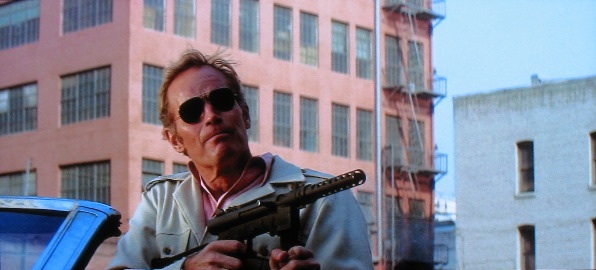
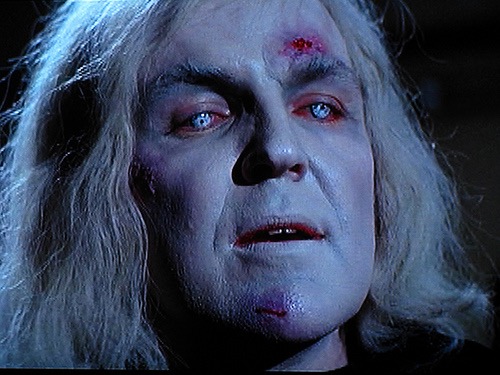
Adapted by the husband and wife writing team of John William Corrington and Joyce H. Corrington and directed by Boris Sagal, THE OMEGA MAN begins with the seemingly last man on earth Dr. Robert Neville (Charlton Heston) riding around a desolate downtown Los Angeles in 1977 with just his Ford Mustang and an automatic weapon.  Its been over two years since biological germ warfare between the superpowers of the world wiped out almost every human on earth. After watching WOODSTOCK in an empty theater for the umpteenth time, Neville emerges from the cinema to discover he's lost track of time. The sun has begun to set. Neville races back to his fortified apartment building before the night's denizens, a group of albino, light averse zombies known as the Family led by their fanatical leader Matthias (Anthony Zerbe) emerge from their nest to attempt to capture and destroy Neville.

In a flashback, we learn Neville worked for the U.S Army as a scientist. As society crumbles, Neville flies away in a helicopter with an experimental vaccine headed for an undisclosed location. The pilot and Neville are overcome by the virus mid-flight and the helicopter crashes. Bloody and about to die, Neville injects himself with the serum which keeps him alive and immune from the plague. Neville is supposedly the last human left alive. Those that did not succumb to the virus have become albino night creatures. When the sun rises, Neville ventures out, scouting for the Family's lair. While trying on some new clothes at a department store, he notices one of the mannequins moving. It's another human, an African American woman. He chases the woman but she eludes him. Neville celebrates the discovery of more humans in a basement bar but he's not alone. He's captured by Matthias and his followers including his second in command Brother Zachary (Lincoln Kilpatrick). Neville is convicted in a kangaroo court judged by Matthias and sentenced to death.


Neville is tied to a wooden wheel in the middle of Dodger Stadium, about to be burned when the floodlights come on, temporarily blinding the zombies. Dutch (Paul Koslo), a former medical student and Lisa (Rosalind Cash), the woman Neville saw in the department store, rescue Neville. Lisa leads him to a motorcycle and they ride off (pulling off some Evel Knevel stunts in the process). Lisa takes Neville to their compound, a house in the hills outside the city. Besides Dutch and Lisa, the other humans consist mostly of young women and children who are seemingly resistant to the virus. Lisa shows Neville her brother Richie (Eric Laneuville) who has caught the virus. He's slowly turning into one of the zombies. Neville takes Lisa and Richie back to his apartment to work on a cure for Richie.

As night falls, Matthias and the Family wait below, calling to Neville, trying to lure him out. Zachary scales the apartment building only to be shot off the balcony by Neville. The next day, Neville and Lisa go to a deserted hospital. Neville provides his blood to create antibodies to create the serum that saved him. They try the serum on Richie and it works. He's human again. Neville reports back to Dutch he has the cure. Dutch promises to swing by Neville's apartment the next morning with the kids and pick everyone up so they can flee the city. But Richie sneaks out to find Matthias and tell him about Neville's cure (which doesn't go well for Richie when he finds the Family's nest). Lisa contracts the virus. When Neville returns to his apartment, Lisa has allowed Matthias and his sect to infiltrate his sanctuary.  As the sun begins to rise, Neville and Matthias wage their final battle for the sake of mankind.


Even though THE OMEGA MAN is post apocalyptic science fiction and takes place six years into the future from the film's 1971 release, the film reflects the social attitudes of the late 60s/early 70s.  All of that went over my head when I watched THE OMEGA MAN as a kid.  I just remember the zombies were scary in their robes and alabaster skin. I remember Heston and Cash jumping the motorcycle over the zombies. I remember the shock of Cash's afro turning from black to white and her eyes becoming dull blue as the virus overtook her. It's incredible the parts of a film you don't recall when viewing it as a kid.  Watching it as an adult, most of THE OMEGA MAN seemed new to me.

Hippie culture oozes from THE OMEGA MAN screenplay. Matthias is a Charles Manson like cult leader. The Family (of light sensitive zombies) are his followers, albino hippies with sores on their faces.  Neville represents the establishment in Matthias's eyes. Ironically, Matthias is shown in flashbacks as a local television anchorman by the name of Jonathan Matthias who witnesses the fall of mankind and blames it on corporations and the military complex. He drops his first name and leads the revolt against the machines, the gadgets, the gimmicks with his plague infected followers (who were all able to pick up matching robes and mirrored sun glasses before the world crashed). They burn material goods. Matthias won't use modern weapons like guns or cars to defeat Neville.  "Do we use the tools of the Wheel as he does?" Matthias asks his followers. "No," they echo back. The Family use catapults and shoot flaming arrows like Crusaders. When they capture Neville, the put a dunce cap on him and lead him to his execution in a wooden cart like some kind of Salem witch. Neville represents the bankers and businessmen of yesterday, now obsolete in this world. "You are refuse of the past," Matthias tells Neville.


Matthias may think Neville represents the material world but Neville's a closet hippie himself. In an extraordinary scene early in the film, Neville goes to a cinema and watches the ultimate hippie film WOODSTOCK (1970) again.  He can quote what few lines of dialogue the film has including the prophetic words from the promoter of the Woodstock music festival Artie Kornfeld who tells an interviewer, "if we can't all live together and be happy, if you have to be afraid to walk out in the street...what kind of way is that to go through in this life?" This is Neville's predicament in this brave new world. Neville would probably smoke dope if he had someone to share it with.  Instead, he drinks bourbon and plays chess with a statue of Julius Caesar, his penthouse decorated with Roman busts from empty museums. Neville may envision himself as a last emperor of mankind.

Charlton Heston was the king of science fiction when he made THE OMEGA MAN.  He was coming off the hugely popular PLANET OF THE APES (1968) and its sequel BENEATH THE PLANET OF THE APES (1970).  After THE OMEGA MAN, he would star in Richard  Fleischer's SOYLENT GREEN (1973) playing a cop in an overcrowded futuristic New York (as opposed to a barren Los Angeles in THE OMEGA MAN). Then, Heston would move into the disaster film genre with Mark Robson's EARTHQUAKE (1974) and Jack Smight's AIRPORT '75. THE OMEGA MAN wasn't the only film about a contagion either.  It was in competition with Universal's THE ANDROMEDA STRAIN (1971) directed by Robert Wise (THE SOUND OF MUSIC) based on an early novel by Michael Crichton about a satellite that crashes in New Mexico bringing back an organism that wipes out a small town.


At the beginning of THE OMEGA MAN, Heston's Neville comes off as a narcissist. As the only human supposedly on earth, he looks at himself constantly in his mirror or in shop windows outside. He has inner monologues with himself (something Heston did at the opening of PLANET OF THE APES). He runs shirtless around the streets of Los Angeles while jogging and wears Hugh Hefner like outfits at night. But when Neville encounters other humans, the filmmakers hearken back to Heston's biblical film past when he played Moses or Ben Hur.  Only this time Heston's a Christ-like figure for these few survivors.  When Neville's almost burned in the stadium, he's tied to a wooden wheel with his arms stretched out, crucifixion style.  When Neville tells Dutch and his followers that he has an antidote, a little girl asks Neville, "Are you God?" In the finale (SPOILER ALERT), Neville's impaled with a spear (just like you know who) thrown by Matthias. As Neville dies, propped up against a fountain, the water blood red, he passes to Dutch the precious antidote to stave off the plague for the survivors. The film ends with Neville dying in a Christ like pose again, as if he were on a cross.  Neville has died to save Dutch, Lisa, and the children of the future. He's died for the sins of the world.

Anthony Zerbe who plays Matthias the leader of the Family was a familiar face to me.  It seemed like he was in every television show in the 70s, usually playing a villain. But Zerbe bounced between television and films effortlessly that decade.  He played the leader of a colony of lepers in Franklin J. Schaffner's PAPILLON (1973) and as a murderous army scout in Stuart Millar's ROOSTER COGBURN (1975). Zerbe plays Matthias as a zombie hippy cult leader. He calls his followers in the Family his brothers and sisters. Matthias never raises his voice to them.  Like the TV anchorman he once was, Matthias speaks in a calm, authoritative tone. But Matthias is manipulative.  He wants total control. He doesn't want to return to the old capitalistic, electronic society.  He wants to start a new world from the ashes of machinery. When Richie tells Matthias that Neville has made a cure and they can become human again, Matthias rejects the suggestion, killing Richie. Zerbe's performance in THE OMEGA MAN is creepy and chilling.

Rosalind Cash as Lisa represents the Black Power movement in THE OMEGA MAN. With her classic afro and kick ass, no nonsense demeanor, she's more Angela Davis of the Black Panthers than black exploitation butt kicker Pam Grier. Naturally, Heston and Cash have an interracial love scene that was all the rage in the early 70s cinema. Yet, in a world where there are now very few humans, the color of one's skin doesn't matter anymore. All that matters is to be human. THE OMEGA MAN was Cash's second film credit. She would play strong black female characters in films like Sidney Poitier's UPTOWN SATURDAY NIGHT (1974) and on numerous television shows. Cash also appeared in the cult classic THE ADVENTURES OF BUCKEROO BONZAI ACROSS THE 8TH DIMENSION (1984) directed by W.D. Richter.


Paul Koslo who plays Dutch, the drop out Medical student now fighting zombies, in THE OMEGA MAN was an up and coming young actor in the 70s. Neville will become a role model for Dutch and passes the torch to the young man to lead the survivors forward in the finale. Dutch is a nice counterpoint to Neville's alpha male. Koslo's films include the car chase cult film VANISHING POINT (1971) and Michael Winner's THE STONE KILLER (1974) with Charles Bronson before having a long career in television.

Director Boris Sagal does a yeoman's job of alternating between empty downtown Los Angeles streets and the Warner Bros city back lot in THE OMEGA MAN to show a world devoid of life but his camera isn't perfect. In a few high long lens shots of Heston driving down a deserted LA city street, moving cars can be seen crossing intersections or even driving on nearby adjacent freeways.  Sagal even freeze frames one high angle shot so the cars appear to be sitting idly on the street. It looks as fake as it sounds. Sagal would go on to direct the landmark television mini-series RICH MAN, POOR MAN (1976). THE OMEGA MAN reunites Heston with director of photography Russell Metty. Metty's career spanned over four decades and he worked with some of the great directors including Howard Hawks BRINGING UP BABY (1937), Stanley Kubrick's SPARTACUS (1960, and Orson Welles TOUCH OF EVIL (1958) which starred Charlton Heston.

One thing that Hollywood and literary authors are very good at are suggesting future scenarios that could happen. Volcanos erupting near large cities, incredibly tall skyscrapers catching on fire, or voyages to Mars seem farfetched in films yet some have occurred already and some will happen in the future. Yes, there was the Spanish Flu in 1918 but we have not seen a worldwide pandemic in a very long time. We've had some close calls recently with Ebola and SARS. In the last twenty five years, two films had plots involving deadly viruses that barely caused a ripple for movie audiences: Wolfgang Petersen's OUTBREAK (1995) starring Dustin Hoffman and Morgan Freeman and Steven Soderbergh's CONTAGION (2011) with Matt Damon and Kate Winslet.  In today's current climate and stay home orders, both OUTBREAK and CONTAGION have been rediscovered thru Netflix and On Demand, becoming more popular than before in this new era we live in.

THE OMEGA MAN is more post-apocalyptic and horror like in its virus plotline than OUTBREAK or CONTAGION. But Richard Matheson's story, no matter how fantastical, has its roots in fact. While these newer pandemic films plots are ripped right from today's headlines, the virus coming from monkeys in Africa or pigs from Asia, THE OMEGA MAN'S pandemic is brought on by man in the guise of super powers that can no longer get along and resort to germ warfare to destroy one another. THE OMEGA MAN is a time capsule, exploring both the future and the recent, turbulent past. If  Charlton Heston's Neville were alive in 2020 and we had an outbreak, how would he fare in today's world of selfies, Tik Tok, and video games?  He might prefer the good old days of albino zombies instead.

Sunday, March 29, 2020

Top Hat (1935)

Back in the day, the phrase "he dances like Fred Astaire" was the equivalent of today's "he's got moves like Jagger." Dancing like Fred Astaire evoked effortless, light footwork as a dancer elegantly glided from one position to another or twirled a partner like they were one and the same. That was Fred Astaire. I knew who Fred Astaire was but I had never seen a genuine Fred Astaire dance film. My first recollection of Fred Astaire was as an animated mailman (in Fred's likeness) on the Christmas television special SANTA CLAUS IS COMING TO TOWN (1970). And my only live action Fred Astaire encounter was an older Fred Astaire in a non-dancing role in the star studded disaster film THE TOWERING INFERNO (1974). I had not witnessed Fred Astaire at the peak of his popularity when he was dancing...well, like Fred Astaire.

But if we're going to talk about Fred Astaire, we have to talk about his dancing partner and co-star Ginger Rogers.  The platinum haired beauty was the other half of the successful dance team of Astaire and Rogers. They made an engaging cinematic couple, able to dance and sing and act (helped by both their vaudeville backgrounds). Astaire and Rogers would make 9 films together for RKO Pictures including FLYING DOWN TO RIO (1933), THE GAY DIVORCEE (1934), and George Stevens SWING TIME (1936). Fred Astaire often danced in a top hat, tuxedo and tails so it seems fitting that TOP HAT (1935) directed by Mark Sandrich (who helmed 5 Astaire/Rogers films) and written by Dwight Taylor and Allan Scott, based on a story by Dwight Taylor, should be my first Fred Astaire dance film.


RKO Pictures appears to have had a regular stock company (in front and behind the camera) that worked together in many of these musical/dance comedies of the 30s. Besides Astaire and Rogers, there's Edward Everett Horton as Astaire's goofy buddy,  Eric Blore playing sarcastic waiters and butlers, Erik Rhodes as the snooty, narcissistic foreign foil (usually Italian), and Helen Broderick as the wise cracking girlfriend/confidante to Rogers. Director Mark Sandrich used this group in three films: THE GAY DIVORCEE, TOP HAT, and SHALL WE DANCE (1937). Even George Stevens cast most of these actors for SWING TIME. Screenwriters Dwight Taylor and Allan Scott either wrote or co-wrote many of these films including THE GAY DIVORCEE, TOP HAT, and FOLLOW THE FLEET (1936). And one of the best collaborators with Astaire, Rogers, and Sandrich was composer and lyricist Irving Berlin who's songs provide the entertainment in these lighthearted, whimsical films.

It doesn't take long into watching TOP HAT to grasp the film's unmistakable universal plot: mistaken identity. Fred Astaire plays Jerry Travers, an American entertainer over in Britain to star in his own London show. His wacky producer Horace Hardwick (Edward Everett Horton) picks him up from the stuffy Thackeray Club (of which Hardwick is a member) and takes him back to his hotel. Jerry's so excited for his show that he tap dances and sings "No Strings (I'm Fancy Free)" in Horace's room. His tap dancing wakes up model Dale Tremont (Ginger Rogers) who's trying to sleep in the room below. While Horace deals with angry hotel managers downstairs, Dale confronts Jerry who's instantly smitten with Dale.


The next day, Dale catches a horse driven hansom cab that Jerry has secretly commandeered. Jerry takes her to her favorite horse stables. Dale goes horse riding but a thunderstorm chases her to cover under a gazebo. Jerry joins her for their first dance duet and the song "Isn't This a Lovely Day (to Be Caught in the Rain."  Jerry returns Dale to the hotel. Her room is crammed with flowers (courtesy of Jerry) and an angry Italian fashion designer Alberto Beddini (Erik Rhodes) who also is smitten with Dale. The next day, Dale tries to find out Jerry's name. The hotel clerk mistakenly identifies Jerry as Horace.  Dale is shocked. She's friends with Horace's wife Madge Hardwick (Helen Broderick). Madge believes Jerry's cheating on his wife.  When Jerry approaches her in the lobby, Dale slaps him in full public view.

Horace hides Jerry in his hotel suite, afraid of bad publicity.  Horace orders his butler Bates (Eric Blore) to follow Dale. Jerry performs his show on opening night. Afterward, he discovers Dale has flown off to Venice, Italy with Alberto (and Bates hot on their trail). Jerry catches the next flight out to find her, taking Horace with him. In Venice, Dale confides to Madge (who was vacationing there) about Horace's philandering but Madge seems nonchalant about the accusation. It doesn't sound like the Horace she knows (because it's actually Jerry). With Madge's blessing, Jerry dances with Dale to "Cheek to Cheek." Later, Alberto proposes to Dale.  Confused by Madge and Horace's seemingly open marriage, Dale accept Alberto's proposition and they are hastily married. Madge punches Horace when he shows up for dinner (she's more ticked off then she let on to Dale). Jerry referees an apology between Horace and Madge and deduces that Dale thinks Jerry is Horace.


Armed with this new knowledge, Jerry sets about to disrupt Dale and Alberto's wedding night. He bursts into their honeymoon suite, upsetting Alberto. After he's kicked out of the room, Jerry takes the suite above them and tap dances thunderously, interrupting the newlyweds night of passion. Alberto races upstairs with a sword to fight Jerry only to encounter Horace. Jerry sneaks downstairs and takes Dale on a gondola ride to explain that he's not Horace but Jerry. Alberto, Horace, and Madge chase after them on a speedboat only to get lost in the fog. Dale's happy to find out Jerry's not an adulterer but she reveals to Jerry she's now married to Alberto. TOP HAT ends with a surprise twist that will solve Dale's situation and bring Jerry and Dale back together.

TOP HAT is a musical comedy about mistaken identity but it also fits into another genre that was wildly popular in the 1930s -- the screwball comedy.  Directors like Howard Hawks and Preston Sturges and Ernst Lubitsch were making screwball comedies in the 30s with great actors and outrageous plots but they didn't have one ingredient that TOP HAT has -- a couple like Astaire and Rogers that could sing, dance, and play comedy. TOP HAT has all these elements. Astaire and Rogers have several dance/song numbers together.  The early sequences are excellent and exhibit why they made a fetching pair. The finale "The Piccolino"is a bit of a letdown, more of a group dance number than a showcase for Astaire and Rogers.  Irving Berlin's songs are catchy and light, just like Astaire and Rogers dancing.  And the film has many wonderful gags and humorous moments. Each player has their moment to shine or get a laugh.


Before watching Fred Astaire dance in TOP HAT, the only dancing actor I had really watched was Gene Kelly in films like Vincent Minnelli's AN AMERICAN IN PARIS (1951) and Stanley Donen's SINGING IN THE RAIN (1952).  Whereas Kelly was a compact, athletic dancer, Astaire is tall and elegant. One surprising aspect about Astaire is that he's cast as a ladies man. He's certainly attractive but not in the classic way.  Kelly was better looking but could play modest and shy very well.  Astaire is cocky and confident. I first noticed this about Astaire while watching HOLIDAY INN (1942) with Bing Crosby. I expected Crosby to be the lady killer but it was Astaire who was the cocky one. Astaire and Kelly would make one film together called ZIEGFELD FOLLIES (1945) dancing together in a sequence directed by Vincente Minnelli called The Babbit and the Bromide. They would also dance together in the MGM musical retrospective THAT'S ENTERTAINMENT II (1976).

Ginger Rogers has that 1930s look for actresses from Jean Harlow to Mae West: platinum blonde hair and big eye lashes. Throw in the curls and a mole on her chin to separate Rogers from the rest. Rogers also had versatility. In TOP HAT, her dance duets with Astaire are beautiful but the two have a genuine chemistry whether it's a romantic scene or a comic one. Rogers wasn't just a dancing actor. She went on to act in more films, winning an Academy Award for Best Actress in Sam Woods' KITTY FOYLE (1940) and garnering excellent reviews in Garson Kanin's comedy TOM, DICK, AND HARRY (1941).


TOP HAT is a screwball comedy with lots of music and dancing. Astaire and Rogers costars in TOP HAT provide much of the comedy and worked with many of the great screwball comedy directors before and after.  Edward Everett Horton made a career out of playing the lead character's best friend or acquaintance. In TOP HAT, Horton plays Astaire's nervous producer/friend Horace Hardwick. He's not so much Astaire's wingman as his fixer with mixed results including being mistaken for Jerry by Dale. Horton began in the silent films but made the transition to talkies with his quivering, falsetto voice. Horton had some of the best character names in film: Egbert "Pinky" Fitzgerald in THE GAY DIVORCEE or Homer B. Bitts in HIS NIGHT OUT (1935). Horton would appear in more traditional screwball comedies like Ernst Lubitsch's THE MERRY WIDOW (1934), George Cukor's HOLIDAY (1938), and Frank Capra's ARSENIC AND OLD LACE (1944).

Horton may have perfected the high strung buddy of the protagonist in screwball comedies but Erik Rhodes (who was born in Oklahoma) found his niche playing European characters with broad accents or dialects. In TOP HAT, Rhodes plays splashy Italian fashion designer Alberto Beddini, who duels with Astaire's Jerry for the hand of Ginger Rogers.  Like Horton, Rhodes would also appear with Astaire and Rogers in THE GAY DIVORCEE as another outrageous Italian character Rodolfo Tonetti. The other Eric in TOP HAT is Eric Blore. Blore perfected the sarcastic servant whether it be a waiter or a butler. In TOP HAT, Blore as Hardwick's man servant Bates steals every scene he's in. Blore would work with the great comedy director Preston Sturges in THE LADY EVE (1941) and later provide the voice for Mr. Toad in Disney's THE WIND AND THE WILLOW (1949). Lastly, Helen Broderick as Hardwick's wife Madge is another delicious comic character. Broderick was wonderful with her deadpan delivery. Broderick would appear with Astaire and Rogers in SWING TIME as well.

Special mention goes to the RKO Art Department (Van Nest Polglase gets the screen credit for TOP HAT) for their beautiful, opulent sets especially the Venice set complete with canals and gondolas and Dale and Alberto's bridal suite. They are huge and minimalist allowing room for dancing or comedic action on a grand scale.  TOP HAT and many of the other Astaire/Rogers films were a diversion for an audience that was just coming out of the Great Depression. The stories transported moviegoers to Rio, London, Venice, and New York. Astaire and Rogers made audiences forget their troubles for an hour and a half, swept up in their graceful, synchronized movements. The rich were portrayed as foolish fops and the servants got all the funny lines. I tip my hat to TOP HAT and its stock company of performers and especially Astaire and Rogers who dazzled audiences for a good decade. Check out TOP HAT or any of the other Astaire/Rogers films for a nice distraction in these unusual times.


Sunday, March 1, 2020

Aguirre, the Wrath of God (1972)

It was the cover of a program that was promoting a German Film Festival at my favorite second run movie theater in Northwest Portland that first caught my attention to AGUIRRE, THE WRATH OF GOD (1972). The photograph on the program terrified me. On the cover was a crazy eyed Spanish conquistador with white hair coursing from underneath his helmet, gazing intensely to his right off camera. Later, I would see a larger version of that photo (it might have been the film's movie poster) only the conquistador was clutching a young girl's head in front of him. Her expression wasn't terror but it wasn't happiness either. I had no idea what the film was about or who made it. I had no intention of ever watching it even as I was mesmerized by this one image.

Jump ahead maybe ten or fifteen years and I stumbled across AGUIRRE, THE WRATH OF GOD on television of all places.  Not the network channels or a cable channel.  It was on our local Public Broadcasting channel. I turned it on just when a soldier was decapitated. As his severed head lay on the ground, he spoke a final word. I was hooked.  It turned out I had caught the last quarter hour of the film.  I eventually rented it and watched the film in its entirety. AGUIRRE, THE WRATH OF GOD is an amazing adventure film, shot on location in Peru, written and directed by German director Werner Herzog during his most creative period in the 1970s. It turns out that the young girl held by the conquistador is his daughter in the film. AGUIRRE, THE WRATH OF GOD would be a cinematic calling card for Werner Herzog but the film would also catapult a little known German actor named Klaus Kinski (more well known as the father of actress/model Nastassja Kinski) into international fame. Herzog and Kinski would make five films altogether. During those five films, they often wanted to kill each other when they weren't enjoying each other's creative company.


Although a work of fiction, AGUIRRE, THE WRATH OF GOD incorporates historical events and real people like Aguirre and Pizarro. Herzog tells his hallucinatory tale through the words of the only supposed account of this lost expedition, a diary kept by the monk Gaspar de Carvajal (Del Negro) who narrates most of the film. It's December 1560 and Spanish explorer Gonzalo Pizarro (Allejandro Repulles) and his Spanish army of conquistadors have trekked over the Andes after obliterating the Incan empire. Pizarro is in search of the legendary city of gold known as El Dorado. As the expedition comes down a steep, twisting Incan trail, they are met by a swollen, raging river.  The jungle is thick. Their cannons become stuck in the mud. Rations are beginning to dwindle. Pizarro orders rafts built. He decides to send a smaller party of forty soldiers accompanied by a few Indian slaves to scout down river for the fabled golden city.

Pizarro puts in charge Don Pedro de Ursua (Ruy Guerra) to lead the survey party. It's not a popular choice. Ursua brings along his mistress Dona Inez de Atienza (Helena Rojo) against Pizarro's wishes. Don Lope de Aguirre (Klaus Kinski) is chosen as second in command. Accompanying Aguirre is his fifteen year old daughter Flores (Cecilia Rivera). The hefty Don Fernando de Guzman (Peter Berling), representing the House of Spain, the priest Gaspar, and Guzman's personal slave Okello (Edward Roland) are also part of the group. The rafts head down the river.  The party encounters some big rapids early on.  One of the rafts becomes stuck in an eddy, unable to push back into the main river. Ursua sets up camp across the river from the helpless soldiers. He sends out a group to try and rescue them against Aguirre's protests. At night, there's an explosion where the stuck raft lays. The next day, the search party reaches the raft.  Every one on board is dead.


Ursua wants to retrieve the bodies to bury but Aguirre knows this is madness. There are hostile Indians hiding on either side of the river. Aguirre quietly orders the raft and bodies blown up by cannon fire. Ursua decides to turn back to rejoin Pizarro. Aguirre has Ursua shot, wounding him and several others. The hefty Guzman is placed in charge but it's really Aguirre and his right hand man Perucho (Daniel Ades) manipulating the soldiers. They convict Ursua of treason but keep him alive. The expedition will continue. The party comes across a deserted Indian village on the bank of the river.  Signs indicate the inhabitants are cannibalistic. Aguirre and the rafts move on. The river slows, providing the unseen Indians opportunity to shoot their poison darts at the boat, picking off the soldiers one at a time. A canoe rows out to the raft from the shore, carrying two members of the Yagua tribe. One of them wears a gold necklace around his neck. Aguirre and the search party believe El Dorado must be close.

The gluttonous Guzman proclaims the land in the name of Spain. Guzman mysteriously dies soon after. The expedition begins to descend into madness. On Aguirre's orders, Ursua is led away into the jungle and hanged. The party drifts past another cannibal village where they're attacked by arrows. The soldiers go ashore and burn the village.  In the confusion, Ursua's mistress Dona Atienza wanders into the woods, never to be seen again. Aguirre threatens anyone who tries to desert with death but his men are hungry and feverish. Soon, even Brother Gaspar and Aguirre's daughter Flores are mortally wounded by arrows. Aguirre pushes on, his raft overrun with monkeys, as he alone searches for the mythical El Dorado.


From Herzog (and cinematographer Thomas Mauch's) opening long shot of conquistadors, Incan slaves, and pack animals winding down a steep Peruvian mountain (actually filmed near the ancient Incan cloud city Machu Picchu), we know we're in for a haunting, mystical adventure.  With period costumes, cannons, and rugged locations, it's hard to imagine that Herzog made the film for $360,000. Herzog used just one 35mm camera that he stole from a Munich film school and had a film crew of only eight people. But like another Herzog film set on a Brazilian river 1982's FITZCARRALDO (also starring Klaus Kinski), Herzog gets a lot of mileage out of filming on a floating set. He can just reposition his actors around the raft in AGUIRRE and there's always interesting scenery as they float by.

Watching AGUIRRE, THE WRATH OF GOD as the Spanish exploratory party floats down the Peruvian river, attacked by spears and poison darts from unseen savages, I couldn't help but think of another film that takes place mostly on a river and encounters a faceless enemy - Francis Coppola's Vietnam War epic APOCALYPSE NOW (1979).  Like APOCALYPSE NOW'S American soldiers, Aguirre and his Spanish conquistadors fight not only inhospitable Indians but fight among themselves and venture into madness the farther into the jungle they go. Coppola has been quoted that AGUIRRE, THE WRATH OF GOD strongly influenced him in the making of APOCALYPSE NOW. In AGUIRRE, the men see a boat lodged high up in a tree.  Is it a figment of their imagination or an actual boat lifted to the top by high water?  In APOCALYPSE NOW, as Willard and his crew get closer to Colonel Kurtz's compound, they pass burnt out helicopters and fighter planes stuck in trees. Ghostly, hellish images that Coppola may have found inspiration in from Herzog's AGUIRRE visual style.

APOCALYPSE NOW was based on Joseph Conrad novella Heart of Darkness set in the African  Congo but AGUIRRE, THE WRATH OF GOD'S journey echoes some of Conrad's story. In the novella, the protagonist Marlow seeks the god-like ivory trader Kurtz  and meets him farther down the river. In AGUIRRE, it's Aguirre who starts to believe he's a god while on the river. Aguirre quietly undermines Ursua, ordering new rafts to be made without Ursua's knowledge when their original rafts float away at night after the river rises. Aguirre has Ursua arrested for treason when Ursua decides to turn back from the mission and rejoin Pizarro. Aguirre has more on his mind than finding El Dorado (which he may not even believe exists). Aguirre has decided he wants to conquer this South American jungle single handedly, throwing out the Spaniards. By the end of the film, still floating aimlessly down the river on a makeshift raft, his crew dying, dead, or feverish, Aguirre and his army of monkeys push on as Aguirre dreams of marrying his daughter and starting a new dynasty in this inhospitable land.  To quote Kurtz from Heart of  Darkness, "The horror...the horror."


AGUIRRE, THE WRATH OF GOD is an impressive film to view with its exotic locations and historical based plot but it's the performance of the kinetic, volcanic Klaus Kinski as the ruthless Don Lope de Aguirre that brings AGUIRRE to another level and made Kinski an international film star. Kinski had appeared in minor roles in some noteworthy films like Sergio Leone's A FISTFUL OF DOLLARS (1964) and David Lean's DR. ZHIVAGO (1965). With his expressive blue bulging eyes and golden locks cascading down from his conquistador helmet, Kinski as Aguirre snarls, hisses, cajoles, and intimidates officers and soldiers alike. He walks like a hunchback at times but he's no cripple. He's a battle tested warrior. Yet for all of Aguirre's Machievellian tendencies, he's also a doting father to his fifteen year old daughter Flores, brushing her hair or showing her a rare pgymy sloth he found in the jungle. Kinski and director Herzog would have a turbulent relationship making AGUIRRE, THE WRATH OF GOD yet the two of them would make four more films together including WOYZECK (1979); a remake of F.W. Munrau's classic NOSFERATU THE VAMPYRE (1979), and FITZCARRALDO.

The rest of the cast of AGUIRRE, THE WRATH OF GOD may not be as famous as Kinski but they are uniformly good. It's an international cast: Helena Rojo who plays Ursua's loyal mistress Inez is Mexican; Ursua was played by Portugese actor Ruy Guerra; Del Negro as the priest Gaspar is American; German Peter Berling who was also a director and appeared in Herzog's FITZCARRALDO appears as Guzman, the delusional representative for the kingdom of Spain on the raft; and Aguirre's daughter Flores was played by Peruvian actress Cecilia Rivera. All the cast and extras deserve special credit for surviving such an arduous production and giving high quality performances.

The 1970s would be Werner Herzog's most creative decade. He became an internationally known director with AGUIRRE, THE WRATH OF GOD and led a wave of new German filmmakers that included Rainier Werner Fassbinder and Wim Wenders onto the cinematic scene.  Today, Herzog bounces between commercial films like RESCUE DAWN (2006) starring Christian Bale and BAD LIEUTENANT: PORT OF CALL NEW ORLEANS (2009) with Nicholas Cage and making numerous documentaries on subjects as diverse as GRIZZLY MAN (2005) about doomed grizzly bear advocate Timothy Treadwell, CAVE OF FORGOTTEN DREAMS (2010) an intimate look at man's earliest known paintings in southern France, or a documentary series ON DEATH ROW (2012-13) about death row inmates. Herzog even finds time to act occasionally, appearing as the bad guy in the Tom Cruise action film JACK REACHER (2012).

Herzog actually combined two real life Spanish expeditions into AGUIRRE, THE WRATH OF GOD'S plot. In 1541, Gonzalo Pizarro did lead an expedition of 200 Spaniards and 4000 Indians into an unchartered area east of Quito, Ecuador. In AGUIRRE, Pizarro sends Ursua to continue the search for El Dorado.  In reality, Pizarro sent his lieutenant Francisco de Orellana to look for provisions for their large group.  Orellana and his brigade of fifty soldiers realized they could never make it back to Pizarro. Instead, Orellana explored the Amazon region. Pizarro would barely make it back alive to Quito in 1542. AGUIRRE'S  plot also borrows from the real life Lope de Aguirre. Aguirre joined an expedition led by Pedro de Ursua in 1560 to search for El Dorado. Ursua and Fernando de Guzman would be killed by Aguirre in a rebellion during the quest. Aguirre would raid several towns and murder his daughter Flores before he was caught and executed by the Spaniards in 1561. Herzog weaves pieces from both historical accounts into the film while making AGUIRRE, THE WRATH OF GOD his own original story as well.

The actual movie program with the image from AGUIRRE, THE WRATH OF GOD that captivated me as a youth.
As I've watched AGUIRRE, THE WRATH OF GOD a few times again recently, I've stared at that image of Aguirre and his daughter on the cover of the DVD that captivated me those many years ago. Gazing at the photo (which is taken from a scene in the film), I noticed something for the first time. Aguirre's daughter Flores has an arrow sticking out of her (which occurs toward the end of AGUIRRE). I was always staring at Kinski's face and his daughter Flores expression, trying to figure out if she was terrified of him, was he hurting her, or what their connection was? All these years the arrow sticking out of her chest eluded me. Until now.  That single photo for AGUIRRE, THE WRATH OF GOD is one of the great posters of all time.

Even today, AGUIRRE, THE WRATH OF GOD is a milestone in guerilla filmmaking, made by a young German filmmaker named Werner Herzog who was determined to get his vision onto celluloid and projected onto movie screens around the world.  AGUIRRE is an adventure film, a mystical film, a story of ambition and madness that we've seen from Shakespeare to the samurai period to modern battle fields. There's no CGI or rear projection as the actors climb down a steep mountain or stand on a makeshift raft down a roaring river in heavy armor.  AGUIRRE, THE WRATH OF GOD is real filmmaking and as impressive today as it was in 1972.